S-Fold vs Pinch Pleat Curtains: Which Heading Suits Your Home?
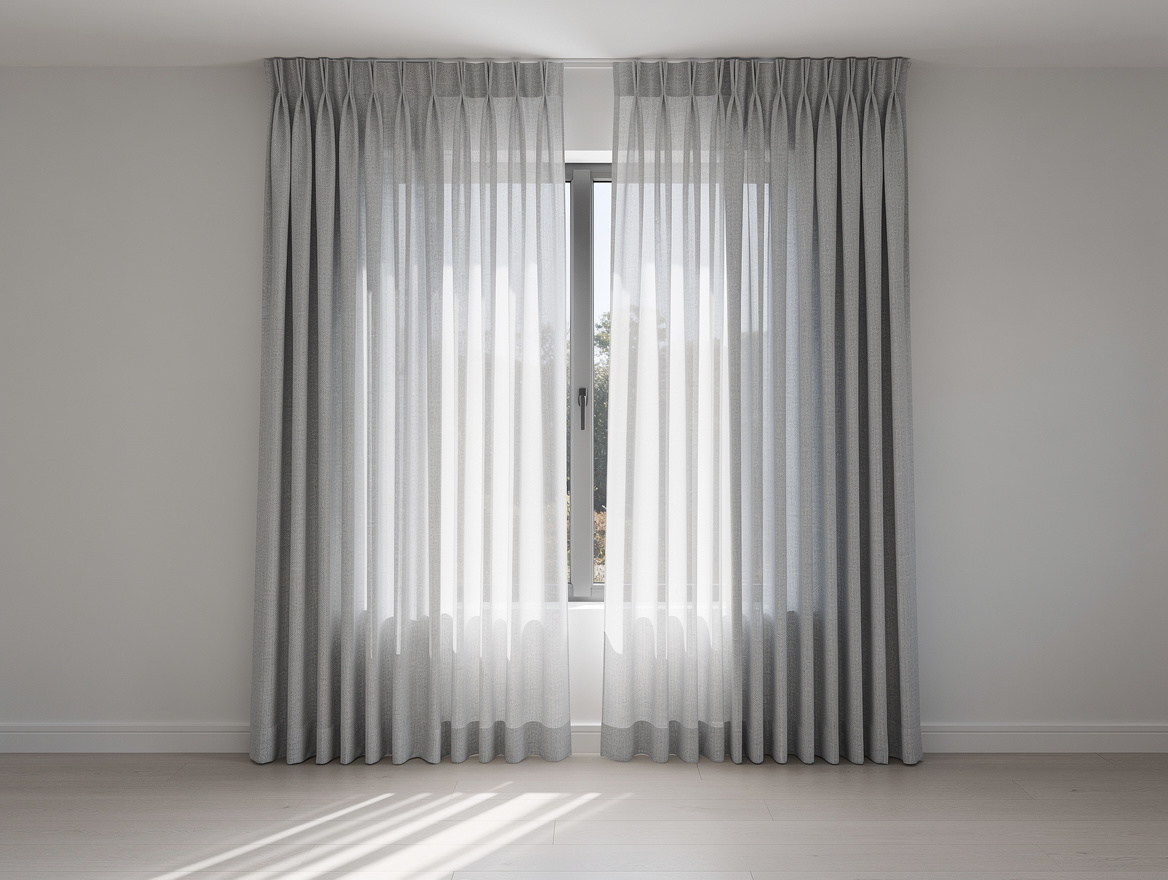
Most people choose fabric first and heading second. It is usually the other way round that matters. The heading is the top of the curtain, and it decides how the fabric falls, how far it stacks off the glass, whether you need a track or a rod, and how the room reads before anyone notices the colour.
S-fold and pinch pleat are the two we are asked about most. Both are made to measure, both suit almost any fabric we carry, and neither is a compromise. They just do different things.
The short answer
S-fold, also called wave fold, runs through a dedicated track on evenly spaced carriers that hold the fabric in a continuous, repeating wave. The look is soft, uniform and architectural, and it stacks back compactly.
Pinch pleat is gathered and sewn at the top into fixed pleats. The drape is fuller and more formal, and because the pleats are built into the curtain rather than the track, it works on a track or a rod.
If you want clean vertical lines and maximum glass when the curtain is open, look at S-fold. If you want a traditional, tailored fullness, or you already have a rod you want to keep, pinch pleat is the one.
What each heading actually is
An S-fold curtain has no sewn pleats. The wave is created by heading tape and a purpose-built track: small carriers sit at regular intervals and hold each curve in place, so the curtain keeps the same shape every time it is drawn. Because the wave lives in the track and tape rather than in the fabric, you can have an S-fold finish in almost anything, from the lightest sheer through to a heavy blockout. That is the main reason S-fold curtains turn up in so many new builds and renovations.
A pinch pleat curtain is the opposite approach. The fullness is gathered at the top and sewn permanently into groups of pleats. The curtain arrives already shaped, which is why it hangs the same on a track or on a rod, and why it holds a deeper, more structured fold.
- S-fold: wave held by the track, no sewn pleats, needs a dedicated S-fold track
- Pinch pleat: pleats sewn into the curtain, works on a track or a rod
- Both are made to measure, and both take the same fabric range
Side by side
| Detail | S-fold | Pinch pleat |
|---|---|---|
| How the shape is made | Heading tape plus evenly spaced carriers on a dedicated track | Pleats gathered and sewn into the top of the curtain |
| Hardware | Purpose-built S-fold track only | Track or rod |
| Look | Even, continuous waves, clean vertical lines | Deeper, structured folds, more formal |
| Stack back | Compact, folds back neatly off the glass | Fuller stack, sits wider when open |
| Fabric range | Sheer through to heavy blockout | Sheer through to heavy blockout |
| Suits | Modern and architectural rooms, wide windows, sliders | Traditional and transitional rooms, existing rods |
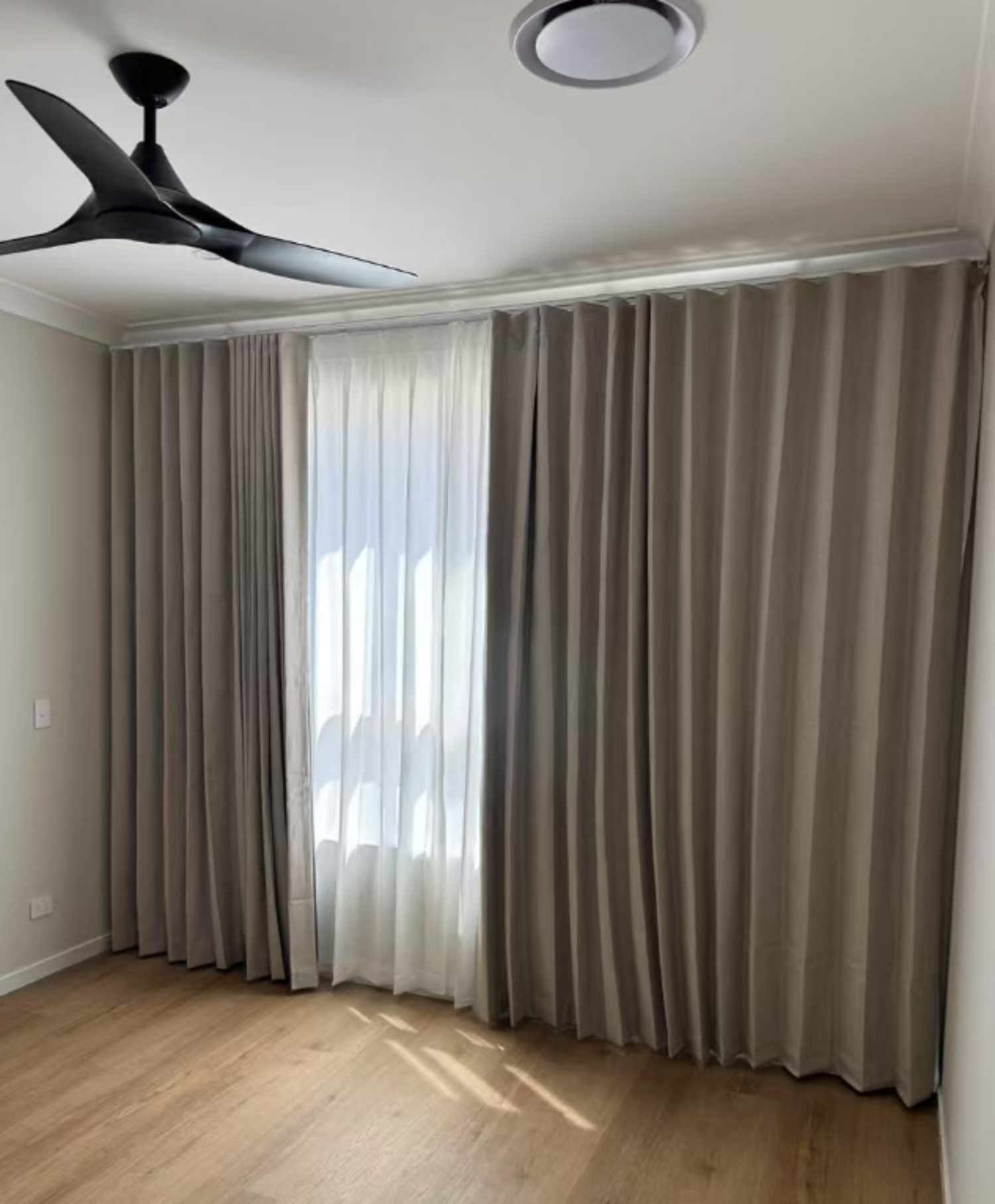
Two numbers carry across both headings. Fullness is expressed as a multiple of the track width, and the ranges we publish for sheers sit at 2 to 2.5 times the track width, with more fullness giving a softer, more gathered look. Hems are finished about 10mm off the floor for a crisp line, or long enough to break gently on the floor if you prefer it softer. When we measure, both of those are set for your window rather than picked off a list.
Track, rod and what the hardware decides
This is the part that most often settles the choice, and it is worth checking before you fall in love with a look.
S-fold only works on an S-fold track. The carriers are what create and hold the wave, so a standard track or a decorative rod will not produce the finish. If you are building or renovating and can plan a recessed or ceiling-fixed track, S-fold rewards that early decision with a very clean line from ceiling to floor.
Pinch pleat is the flexible one. The pleats travel with the curtain, so it will hang from a track or slide onto a rod. If you have a rod you like, or the window suits a visible decorative finish, pinch pleat keeps that option open.
- S-fold requires the dedicated track, no exceptions
- Pinch pleat suits a track or a rod
- Plan track type early on new builds; it is far easier before linings and cornices go in
Stack back, glass and the view
Stack back is how much wall or window the curtain covers when it is fully open. It is the practical difference people notice a week after installation, not on the day.
S-fold folds back into a tight, regular concertina because every wave is the same depth. On a wide slider or a window with a view, that compactness is the argument: more glass stays clear.
Pinch pleat stacks fuller. The sewn pleats hold more fabric at the top, so the open curtain occupies more width. In a room where the curtain sits against a wall rather than across the glass, that is not a problem, and the deeper fold is part of the look you are buying.
Where the window is wide, we often plan the stack onto the wall beside the opening rather than over the glass. That is a measuring decision, and it applies to both headings.
How the room and the fabric change the answer
Fabric weight does not rule either heading out, but it does change the feel.
In a sheer, S-fold reads very soft and modern, and the even waves keep a large run of fabric looking deliberate rather than loose. In a heavy blockout, S-fold gives a flat, architectural face with strong vertical lines.
Pinch pleat in a heavy fabric is where the heading earns its reputation: the sewn pleats hold depth and shadow, which is what makes a formal room feel finished. In a sheer, pinch pleat gives a more traditional gathered look than the wave.
Rooms sort themselves out quickly once you look at the rest of the space. Square-set openings, minimal architraves and flush finishes tend to want S-fold. Deep skirtings, mouldings and timber windows tend to want pinch pleat. There is no rule against mixing them across a house, though a consistent heading across the main living areas ties the rooms together, and we would usually suggest picking one for the open-plan spaces and treating bedrooms separately.
You can see the full set of heading styles we make if you want to compare these two against pencil pleat and eyelet before deciding.
Where this sits next to other comparisons
Three questions come up alongside this one, and they are not the same question.
S-fold vs pencil pleat. Pencil pleat is a tightly gathered heading that suits both tracks and rods. It is the timeless all-rounder rather than the modern or the formal option, and it sits between the two headings in this article.
S-fold vs eyelet. Eyelet is a metal-ringed top that slides straight onto a rod and falls in relaxed, even folds. It is the easiest to draw and the most casual of the group. Eyelet is rod-only, so it is not an alternative to S-fold on a track.
Heading vs fabric. Choosing S-fold or pinch pleat does not decide light control. Whether the room goes dark at night is a fabric and layering question, not a heading question. A sheer and a blockout on a double track will behave the same way under either heading.
The other comparison worth reading first is made-to-measure against ready-made, because heading choice is one of the things that only opens up once you go made-to-measure curtains.
Frequently asked questions
Is S-fold more expensive than pinch pleat?
The heading is only one input. Window size, fabric, lining and the track all move the number, and S-fold requires its own track where pinch pleat may reuse existing hardware. The honest comparison comes from a measure and quote on your actual windows rather than a general rule.
Can I put S-fold curtains on a normal curtain rod?
No. The wave is created by carriers on a purpose-built S-fold track. On a standard track or a rod the fabric will not hold the shape. If you want to keep a rod, pinch pleat, pencil pleat or eyelet are the headings to look at.
Which heading stacks back the least?
S-fold. The waves fold into a regular, compact concertina, so more of the glass stays clear when the curtain is open. Pinch pleat holds more fabric at the top and stacks wider.
Can I have S-fold in sheer fabric?
Yes. Because the wave comes from the track and heading tape rather than the fabric, S-fold works from the lightest sheer through to a heavy blockout, and S-fold sheers are one of the most common requests we measure for.
Do pinch pleat curtains work with a double track?
Yes. A double track lets you run a sheer on the front rail and a blockout on the back, and pinch pleat hangs from either rail. The same layering works with S-fold, provided both rails are S-fold tracks.
Next step
Both headings are made to measure, cut and sewn in-house, and installed by our own team, with a lifetime warranty on tracks. The quickest way to settle S-fold against pinch pleat is to see the two hanging in the same fabric. In our showrooms you can draw both, look at the stack, and compare the fold depth side by side.
When you are ready, book a free measure and quote and we will bring samples to your window.