Do Plantation Shutters Block Out Light? What to Expect
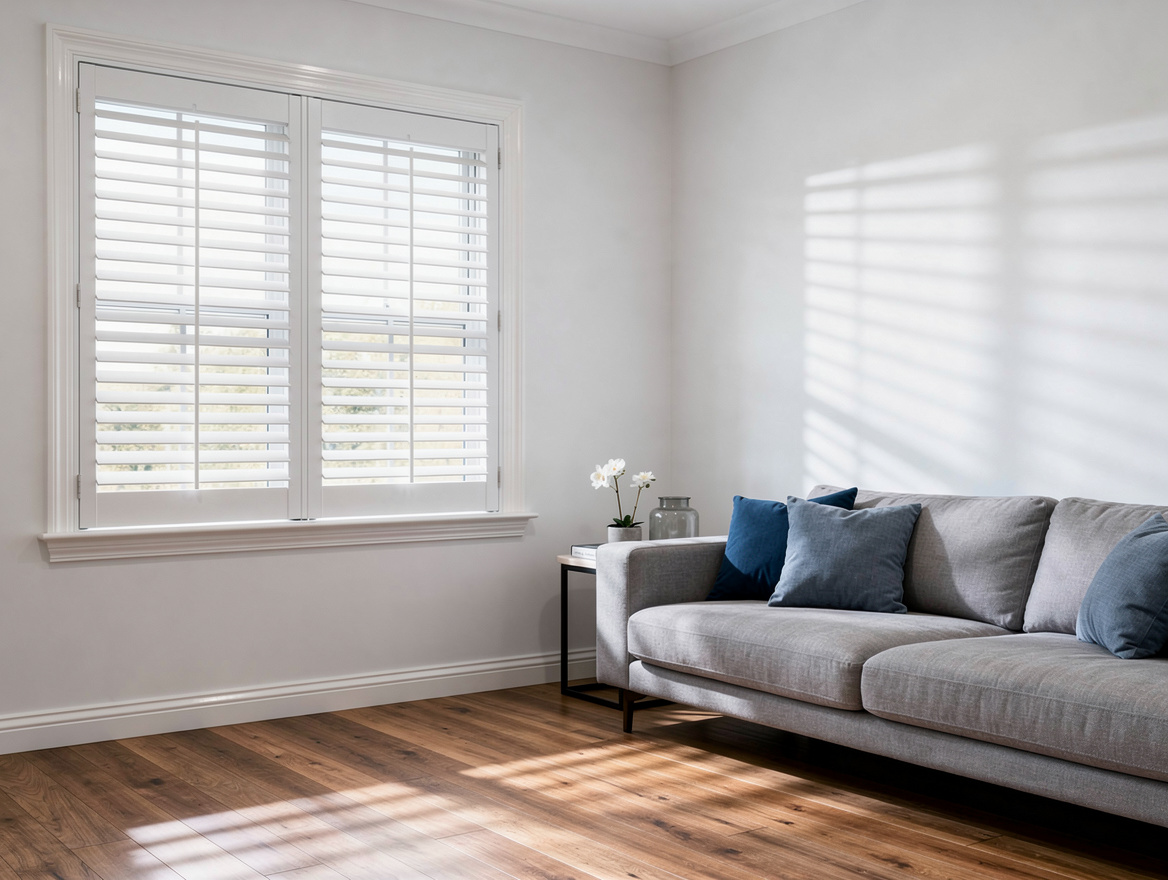
Short answer: closed louvres cut most of the light, but plantation shutters are not a blockout product. They are a framed fitting with moving parts, so when the louvres are shut you get a dim room rather than a dark one, with thin lines of light reading around the frame and between the blades.
That is not a fault. It is what a shutter is. The trade you are making is precise control during the day in exchange for not going fully dark at night, and whether that trade suits you depends entirely on the room.
How shutters control light
A shutter panel holds a row of horizontal blades, called louvres, in a fixed frame. A tilt mechanism turns them together. That is the whole system, and it gives you three positions rather than the two you get with most window coverings.
Open, the louvres sit flat and you keep the view and the daylight. Angled up, light bounces toward the ceiling and the room stays bright while anyone at street level sees very little. Angled down, you push light toward the floor and keep the room softer. Closed, the blades overlap and the room goes dim.
That middle range is the reason people choose plantation shutters over a blind. A roller is either down or up. A shutter lets you keep the light and lose the view, which is a distinction that matters far more on a street-facing window than most people expect before they live with it.
- Louvres tilt together, so light and view are set separately
- Angled up keeps the room bright while blocking sightlines from the street
- Closed gives a dim room, not a dark one
Where the light still gets in
Three places, and it is worth knowing them before you decide.
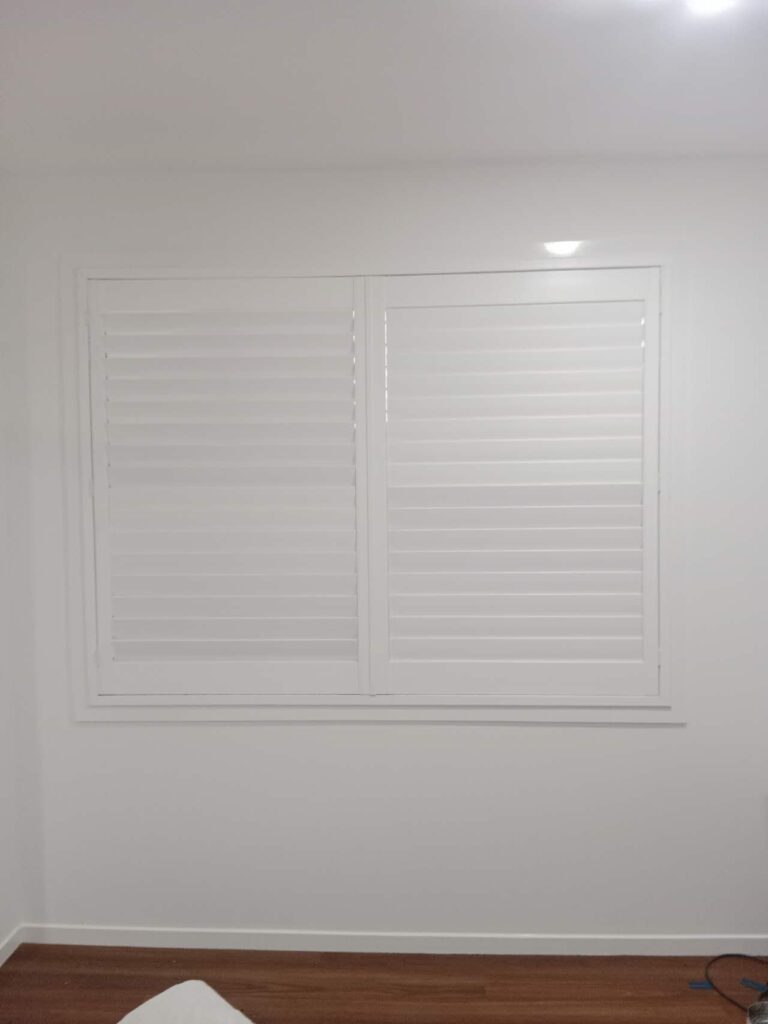
Between the louvres. Closed blades overlap, but they are moving parts, so the seal is a close fit rather than an airtight one. On a sunny elevation you will see fine lines of light along each blade.
Around the frame. Shutters are made to measure to sit gap-free in the reveal, and a precise fit is what stops this being a problem. There is still a frame edge, and on a bright morning it reads as a thin outline.
Through the tilt and hinge points. Small, but visible in a very dark room.
None of these matter in a living room. All of them matter at 5am in a bedroom facing east.
- Fine lines between closed louvres on sunny elevations
- A thin outline around the frame
- Precise measuring reduces all of it, but does not eliminate it
Louvre size changes the look, not the darkness
This is the question we get asked next, and the answer is usually the opposite of what people assume. Plantation shutter louvres typically run from around 63mm up to 89mm and larger.
Wider louvres mean fewer blades across the window, a bolder and more contemporary look, and a clearer view when they are open. Narrower louvres give a more traditional look and a finer pattern of lines.
What wider louvres do not do is make the room darker when closed. Fewer, larger blades and more, smaller blades both close to a similar result. Choose the louvre size for the look of the window and the proportions of the room, not as a light-control decision.
- 63mm to 89mm and larger is the usual range
- Wider louvres, clearer view when open, bolder look
- Louvre size is an appearance decision, not a darkness one
Room by room
Living areas. This is where shutters do their most useful work. You spend the day adjusting the angle rather than opening and closing anything, and a dim room at night is not a problem because you are awake in it.
Home offices and studies. Screen glare is the issue here, not privacy, and it moves through the day as the sun comes round. Tilting the louvres down bounces light to the floor and takes the hot spot off a monitor without dropping the room into gloom, which is something you cannot do with a blind that is either up or down. West-facing desks benefit most.
Kids' rooms. Two things matter. Shutters are a fixed, framed fitting with no hanging cords or chains, which removes a hazard that soft window coverings with pull cords introduce. The second is the same bedroom caveat as below: if the room needs to be dark for daytime naps, plan a second layer rather than expecting the shutter to do it.
Street-facing rooms. The angled-up position is the argument. Daylight in, sightlines out, no fabric between you and the window.
Bathrooms, kitchens and laundries. Material matters more than light here. PVC and aluminium shutters are waterproof and handle humidity, steam and splashes, which is why they are the usual pick for wet rooms. Timber suits living areas and bedrooms.
Bedrooms. This is the room to think hardest about. If you sleep lightly, wake early, or the window faces the morning sun, shutters alone will not give you the darkness you want.
If you need a bedroom to go properly dark
Shutters and full darkness are not the same job, and the fix is to add the layer that does that job rather than to expect more from the shutter.
The usual approach is a shutter for daytime control plus blockout curtains for night. The shutter handles view, privacy and glare all day. The curtain closes over the whole reveal at night, covers the frame edge as well as the window, and takes the room dark.
If you are weighing fabric options for that second layer, our guide to how sheer and blockout fabrics behave covers what each one actually does at the window.
Worth saying plainly: no window covering on the market goes to perfect darkness on its own. Rollers leave a gap down each side, curtains let light around the edges unless they are generously oversized, and shutters read at the frame. Layering is how a room actually gets dark, and that is true whichever product you start with.
- Shutters for daytime control, blockout curtains for night
- The curtain covers the frame edge, which is what the shutter cannot do
- No single product takes a room to full darkness by itself
What we check when we measure
A gap-free fit is the single biggest thing separating a shutter that controls light well from one that leaks. When we measure, we check the reveal is square, whether the frame should sit inside or outside the recess, how the panels should split so they fold clear of the opening, and which material suits the room's moisture and use.
Panel splits are worth a sentence on their own, because they change how the window reads more than most people expect. A wide window carried on two tall panels gives long clean lines and fewer frame edges, which means fewer places for light to show, but each panel is heavier to swing open. Split the same window into four and the panels fold back more compactly and clear the opening better, at the cost of two more vertical frame lines across the glass. On a window you open often, the compact split usually wins. On a picture window you rarely touch, the longer panels look better and leak slightly less.
Sill and reveal depth decides the other half of it. A deep reveal takes an inside-mount frame neatly and keeps the whole fitting flush with the wall. A shallow or uneven reveal is usually better served by an outside mount, where the frame sits proudly over the opening and covers the edges rather than fighting them. We work that out on site, because a reveal that looks square rarely is.
Our shutters are made to measure, supplied and professionally installed, with a lifetime warranty on the shutters. Materials run to premium basswood timber, PVC and powder-coated aluminium, and the right one depends on the room rather than on preference alone.
Frequently asked questions
Do plantation shutters block out all light?
No. Closed louvres cut most of the light and leave a dim room, with fine lines visible between the blades and a thin outline around the frame. Shutters are a light-control product rather than a blockout one. For full darkness, pair them with blockout curtains.
How much light do plantation shutters block?
Enough for a comfortably dim room with the louvres closed, and anywhere from full daylight to almost none as you tilt them. The useful part is the range: you set light and view separately, which no roller blind lets you do.
How do you stop light coming through plantation shutters?
Reduce it, rather than stop it. A precise made-to-measure fit removes most of the frame gap, and choosing whether the frame sits inside or outside the reveal changes how the edges read. For an actual dark room, add a blockout curtain over the top.
Do wider louvres block more light?
No. Wider louvres give a clearer view when open and a bolder look, but closed panels of either size darken the room to a similar degree. Pick louvre size for the appearance of the window.
Are plantation shutters a good choice for a bedroom?
They are, provided you are comfortable with a dim room rather than a dark one, or you plan a blockout layer as well. If you wake with the light or the window faces the morning sun, plan for both from the start rather than adding the second layer later.
Next step
The quickest way to judge this is to see a shutter closed in daylight rather than to read about it. In our showrooms you can tilt the louvres through the full range and see exactly how much light each position holds back.
When you are ready, book a free measure and quote and we will check the reveal and talk through whether one layer or two suits the room.