Blockout Curtains vs Blockout Blinds: How to Get the Darker Room You Wanted
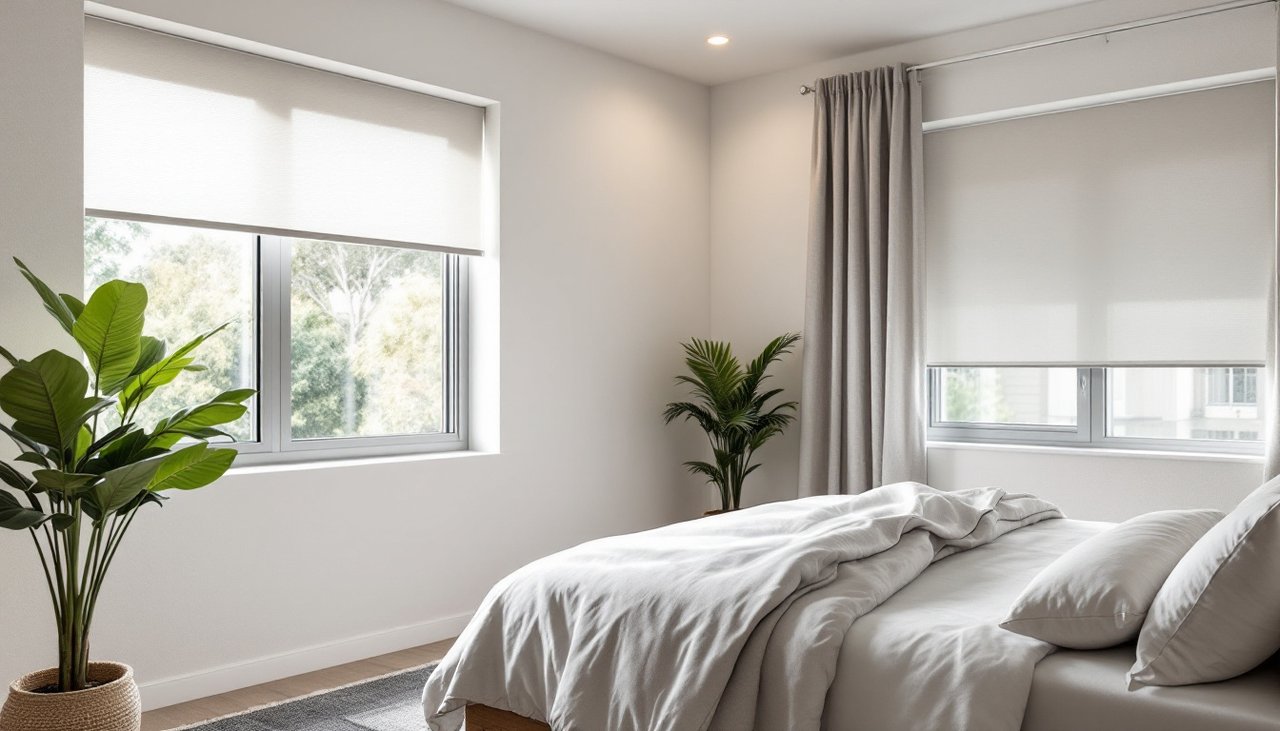
Dana had done everything right, or so she thought.
She works nights at a hospital on Brisbane's northside, which means her bedtime arrives just as the neighbourhood wakes up. The school run, a leaf blower, and the morning sun landing squarely on her bedroom window. After months of sleeping with a folded towel across her eyes, she ordered the darkest blind she could find online. The listing promised blackout fabric. The photos showed a room as dark as a cinema.
The blind went up on a Saturday. On Monday morning she came home from her shift, pulled it down, climbed into bed, and stared at the ceiling. The fabric itself was as dark as slate. But down both sides of the window ran a pair of glowing lines, bright enough to throw a pale stripe across the wall and straight into her eyes. A thinner line glowed along the bottom, where the blind met the sill.
Her instinct was that the fabric was faulty. Her next thought was worse: she had bought the wrong product altogether, and heavy curtains were what she should have chosen from the start. She walked into one of our showrooms ready to replace the lot.
What our consultant told her came as a surprise. The blind was doing its job. Not a speck of daylight was passing through that fabric. The light was going around it.
That is the part most people miss when they compare blockout curtains vs blockout blinds. They picture a contest between two fabrics and assume the thicker, heavier option wins. In practice, both fabrics stop light. The darkness you end up with depends on what happens at the edges, and that comes down to how each product is fitted to your particular window.
Before you order anything for your own window, it helps to have someone stand in the room and look at where the light would really get in. That is what a free measure and quote is for, and it often settles the curtains or blinds question on the spot.
Why the Light Went Around the Blind, Not Through It
Dana is a composite, pieced together from the bedroom conversations our showroom team has with shift workers, new parents and anyone with an east-facing window. The details change from house to house. The glowing lines down the sides of the blind tend to stay the same.
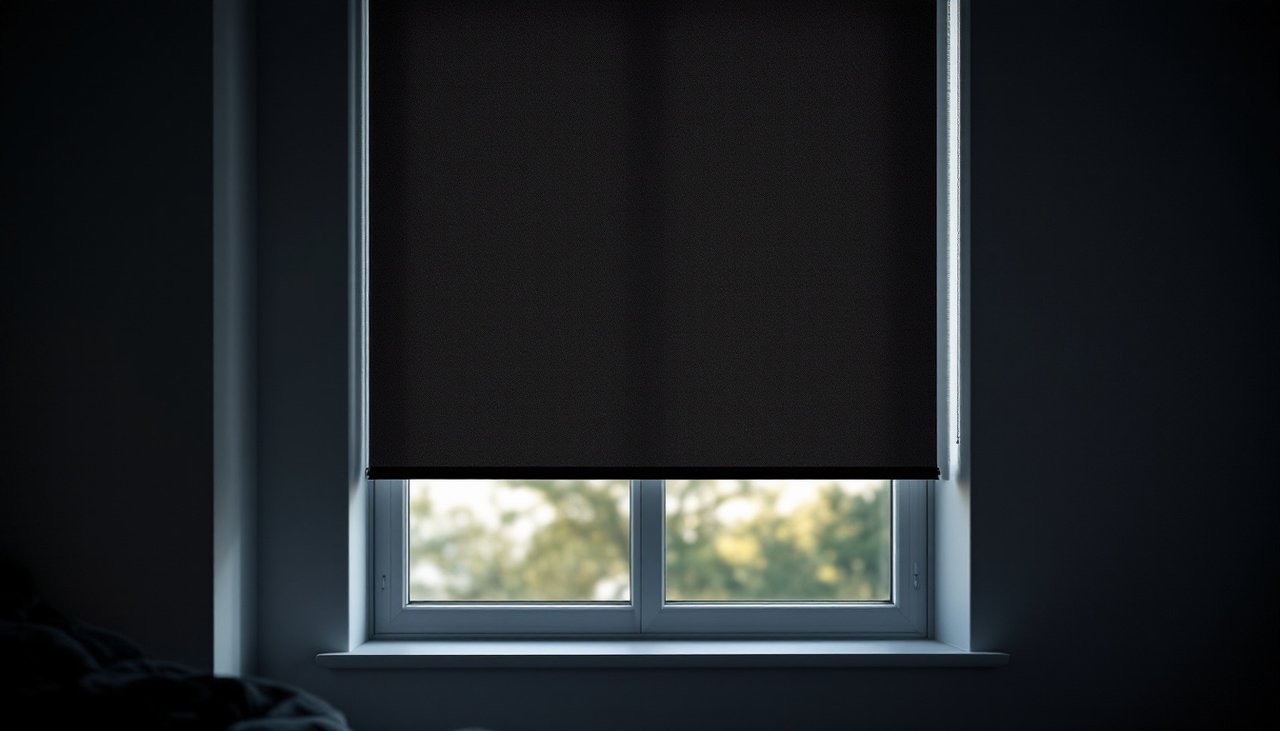
A roller blind is a length of fabric wound around a tube, held by a bracket at each end. When the blind sits inside the window recess, the fabric has to be cut narrower than the opening. The brackets and the control mechanism take up room at the ends of the tube, and the fabric needs clearance so it can roll up and down straight without catching on the frame. Window recesses are also rarely perfectly square, so a little extra room stops the fabric rubbing on the tighter side.
The result is a side gap. On a recess-fitted roller blind, the space between the fabric edge and the frame usually lands somewhere around 10 to 15 mm. That sounds tiny, and on a cloudy afternoon you might not notice it at all. But when a low morning sun hits the glass at an angle, that narrow slot turns into a bright strip, and in a dark room your eyes go straight to it.
There are two smaller leaks as well. Light can slip over the top of the roll, where the fabric leaves the tube, and along the bottom, where the rail rests near the sill. None of this is a fault. It is simply how a blind that rolls inside a frame has to be built.
Blockout fabric decides how much light passes through. The fit decides how much light gets around.
That idea reframed the whole decision for Dana. She did not need a darker fabric. She needed less gap.
Here is the side-by-side that Dana wished she had found on page one:
| Blockout curtains | Blockout blinds | |
|---|---|---|
| Light leakage at the edges | Fabric overlaps the frame on all sides, so edges stay dark | Small side gaps let light in unless fitted with side channels |
| Where it mounts | On the wall or ceiling, outside the window frame | Usually inside the window reveal, close to the glass |
| Wall space and stacking | Needs wall room beside the window to stack when open | Rolls into a compact cassette, no wall space needed |
| Top and bottom treatment | Pelmet or ceiling-mounted track closes the top gap | Cassette or pelmet at the top, bottom bar sits near the sill |
| Layering | Pairs with sheers on a double track | Works behind curtains, or as a dual day and night roller |
| Cleaning and care | Machine wash or dry clean, depending on fabric | Wipe down with a damp cloth |
What Changed When Curtains Entered the Conversation
Our consultant asked Dana for a photo of her whole bedroom wall, not just the window. That request is the thing that separates curtains from blinds, because a curtain does not live inside the frame. It hangs from a track above the window and can be made wider and taller than the glass.

On Dana's wall there was open space either side of the window and a clean run up to the ceiling. That gave a curtain everything it needs to close the gaps a recess blind leaves behind. Across the width, the curtain can extend past the frame on both sides, so the fabric overlaps the wall rather than stopping at the edge of the glass. At each end of the track, the fabric can return back to the wall, closing the side slot where light would otherwise sneak around. Up top, a track fixed to the ceiling, or a pelmet over a wall-mounted track, cuts the glow that spills over the top, and a wraparound track does a similar job at the corners. Down low, a floor-length drop means the hem sits well below the sill instead of stopping at it.
The fabric works the same way as a blind's. Blockout curtains use a tightly woven or coated fabric, often with a backing layer, and because the light-blocking layer sits behind the face, a crisp white curtain can darken a room just as well as a charcoal one. Dana had assumed she would be stuck with something heavy and dark. She was relieved to hear otherwise. You can see the fabric and heading options on our blockout curtains page, including S-fold and pinch pleat styles.
Curtains come with trade-offs, and it would be unfair to pretend otherwise. When you open them, all that fabric has to go somewhere, so it gathers in a stack beside the window. If the stack sits over the glass, you lose some daylight and view. If it sits on the wall, you need the wall space to give. A wardrobe, a door or a corner right next to the window can make that tricky. Curtains also mean more fabric to vacuum or send for cleaning, and some people simply prefer the tidy, flat look of a blind.
The Room Where the Blind Still Made More Sense
Dana's house had a second window that needed attention: a small one in her study, sitting hard against a built-in bookshelf, with her desk pushed right up under the sill. There was nowhere for a curtain to stack and nowhere for a floor-length hem to fall. For that window a blind was the obvious answer, and a curtain would have been a daily frustration.
That pattern shows up in plenty of homes. Blinds tend to make more sense where a window sits close to a wall, cupboard or corner, where furniture lives under the sill, in apartments where wall space is tight, and in rooms where you want the window to read as a clean, flat line.
A recess gap does not have to be the end of the story, either. There are three common ways to narrow it. A face fit mounts the blind on the wall or architrave in front of the recess, so the fabric is wider than the opening and overlaps the frame instead of sitting inside it. Side channels run down the edges of the window and hold the fabric edge, closing most of the slot where light slips through. A pelmet or cassette across the top covers the roll and the spill above it. Whether a face fit suits your window depends on the architrave and what sits around it, which is exactly the kind of detail that is easier to judge in person.
There is also the dual day and night roller, which pairs a blockout roller with a light-filter or sunscreen roller on the same bracket. During the day you lower the lighter fabric for glare control while keeping a view, and at bedtime you lower the blockout. Cordless and motorised controls are available too, a sensible option for kids' rooms and high windows. The full range sits on our blockout blinds page.
For Dana's study, a face-fitted blockout roller was the plan. It kept the desk clear, sat neatly above the bookshelf and handled most of the side glow a recess fit would have left behind.
Why Dana Ended Up With Both
Back in the bedroom, the question was no longer curtain or blind. It was whether to throw out a perfectly good blockout blind at all.
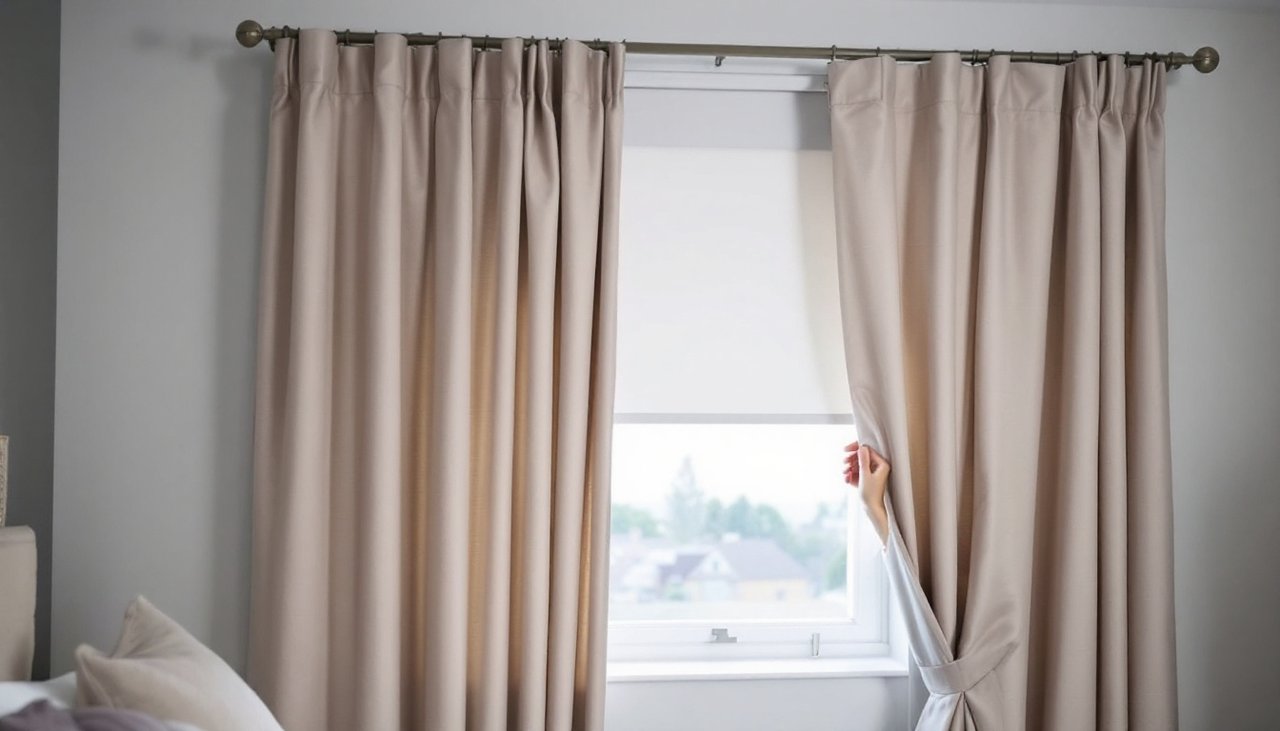
She did not. The blind stayed in the recess, where it blocks the glass directly. A blockout curtain went up on a ceiling-fixed track in front of it, made wider than the window, with returns at each end and a drop to the floor. The blind handles the light coming through the glass, and the curtain covers the slots the blind leaves at the sides, top and bottom. For someone trying to sleep through a bright Brisbane morning, layering the two is the set-up we suggest when darkness matters more than anything else.
Layering is not the only way to combine window furnishings, and it is worth being clear about which pairings make sense. Rooms work well with one soft layer plus one hard layer. A sheer curtain is a soft layer: it softens daylight and gives daytime privacy, but it will not make a room dark. So if you love sheers, the partner behind them should be a blockout, either a blockout roller blind or a blockout curtain on a double track. Pairing a sheer with a sunscreen roller gives you two soft layers, and at night, with lights on inside, the street can still see silhouettes. The natural partner for a sunscreen blind is a blockout roller on the same bracket.
Not every room needs this much. A living room with afternoon glare on the TV might be perfectly served by a single blockout roller. A formal lounge might want curtains for the look alone. Layering earns its place in bedrooms used for daytime sleep, nurseries where naps happen in daylight, and media rooms where a sliver of light shows up on the screen.
The Search Terms That Sent Her in Circles
Before she came in, Dana had spent a few afternoons reading. Half of what confused her was vocabulary, not product. These are the terms that tend to get tangled:
- Blockout vs blackout. In Australia, blockout is the usual spelling, and blackout is the more common word overseas. They describe the same thing: a fabric that stops light passing through. If you are searching for blackout curtains or blackout blinds, you are looking at the same products as blockout curtains and blockout blinds, with no hidden difference in performance behind the spelling.
- Blockout vs light filtering and sunscreen. Light-filter and sunscreen fabrics are designed to let some light in while cutting glare. They are not blockout, even in dark colours, so they are not the right choice when the goal is sleep.
- Roller blind vs blockout blind. Roller describes how the blind works; blockout describes the fabric. A roller blind can be sunscreen, light filtering or blockout, so if darkness is the goal, check the fabric, not just the style.
- Blockout fabric colour. Because the light-blocking layer sits within or behind the face fabric, a pale or white blockout can still darken the room. The face colour is a decorating choice.
- Sheer vs blockout curtains. That is a different question from this one. It is about whether you want soft light or darkness, rather than which blockout product fits your window, and we cover it separately on our blog.
What Dana Would Tell a Friend Choosing Today
These days Dana sleeps through the school run. When a friend asked her whether to go with blockout curtains or blockout blinds, she did not name a product. She told them to stand at the window and look at the wall around it. Then she passed on the questions our consultant had asked her:
- Is there wall space either side of the window for a curtain to stack, or does something sit right beside it?
- What lives under the sill: a bed head, a desk, a cot, or nothing at all?
- How dark does the room really need to be, and at what time of day?
- When it is open, would you rather see a soft line of fabric or a flat, tidy blind?
- Does the window already have a blind that could stay and be layered?
If the answers point to open wall space and a need for real darkness, blockout curtains usually cover the edges more naturally. If the window is tight against furniture or walls, a blockout blind, ideally face fitted or with side channels, tends to suit the room better. And if sleeping in daylight is the whole point, the answer is often both.
The question is rarely which fabric is darker. It is which fit leaves less room for light to get around.
The most useful thing you can bring to that decision is someone who can look at your real window. On a free measure and quote, our team checks the recess, the wall space, the ceiling and what sits under the sill, then walks you through where light would get in with each option before anything is made. Curtains and blinds are then made to measure in our own workshop and professionally installed. You can book a free measure and quote online, or visit one of our 19 showrooms across Queensland, New South Wales, Victoria, South Australia and Western Australia to handle blockout fabrics side by side, including the white and pale tones that surprise plenty of people.
Questions We Hear About Blockout Curtains and Blockout Blinds
Are blockout curtains darker than blockout blinds?
The fabrics in both stop light passing through, so the difference is in the fit. A blockout curtain made wider and taller than the window, with returns at the ends, usually leaves less edge light than a roller blind fitted inside the recess. A face-fitted blind or side channels narrow that gap considerably.
Is there a difference between blackout and blockout?
No. Blockout is the common Australian spelling and blackout is more common overseas, but both describe fabric that stops light passing through. Blackout blinds and blockout blinds are the same product.
Why is there a gap down the sides of my roller blind?
A blind fitted inside the recess needs clearance for its brackets, and so the fabric can roll straight without catching on the frame, which usually leaves a side gap of around 10 to 15 mm. That gap is normal. A face fit, side channels or a blockout curtain layered in front can close most of the light it lets in.
Can I add a blockout curtain over an existing blind?
In most rooms, yes, as long as there is space above the window for a track and room beside it for the curtain to stack when open. The blind stays in the recess and the curtain covers the edges, a set-up worth considering for bedrooms used for daytime sleep.