Are Sheer Curtains See Through at Night? Sheers Alone vs Layered Options
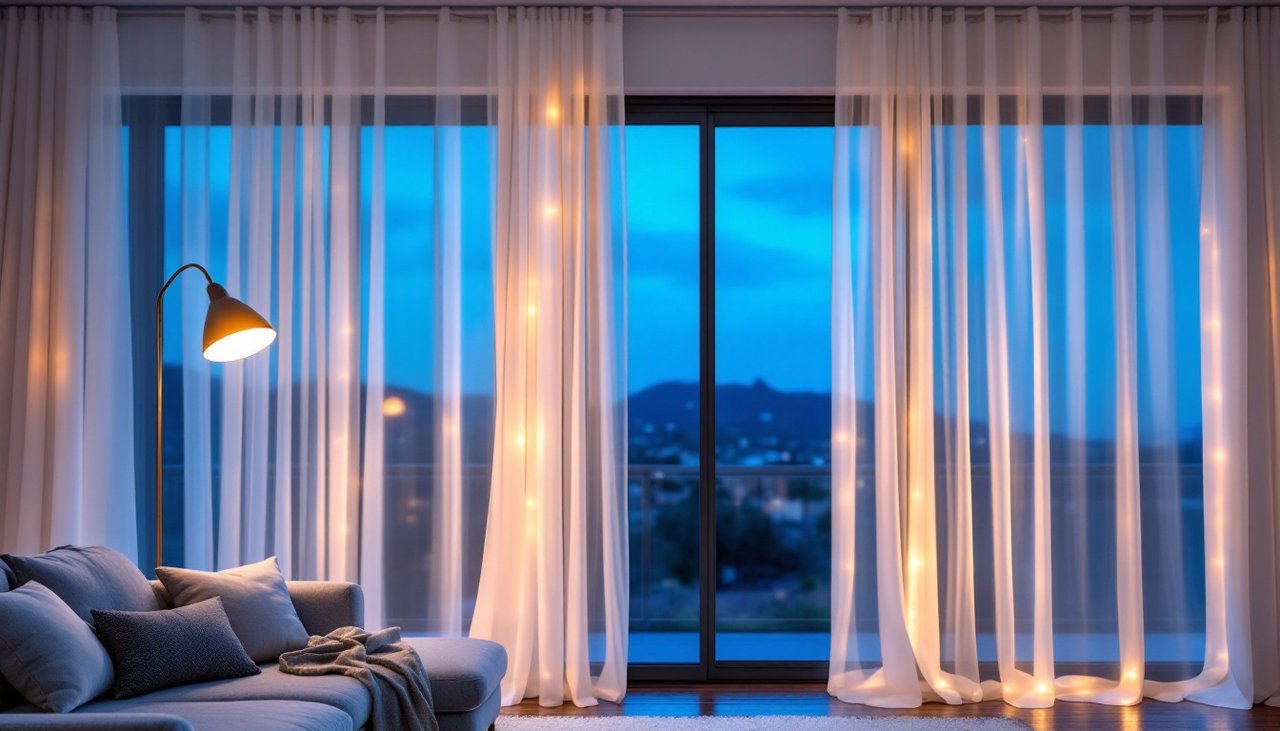
Sheer curtains are made up at 2 to 2.5 times the width of the window, so there is at least double the fabric across the glass. Yet once the sun goes down and a single lamp goes on inside, that same sheer can show the street a clear outline of you on the sofa. So, are sheer curtains see through at night? Yes, noticeably more than they are by day, and the reason is light, not fabric quality. Below we compare sheers on their own with the layered setups that fix the problem, so you can pick the right one for each room.
If your lounge or bedroom faces the street, this is worth sorting before too many more evenings go by. Book a free measure and quote and we will measure on site and help you choose both the sheer and the layer that sits behind it.
Daytime vs Night-Time: Why the Same Sheer Behaves Differently
Sheers work on a simple rule: you see through fabric from the darker side towards the brighter side. During the day the outdoors is far brighter than your room. Daylight hits the face of the sheer and makes it glow, so anyone walking past sees a soft, pale surface and very little behind it. From the sofa you are looking from the dim side into the bright side, which is why you keep your view of the garden.
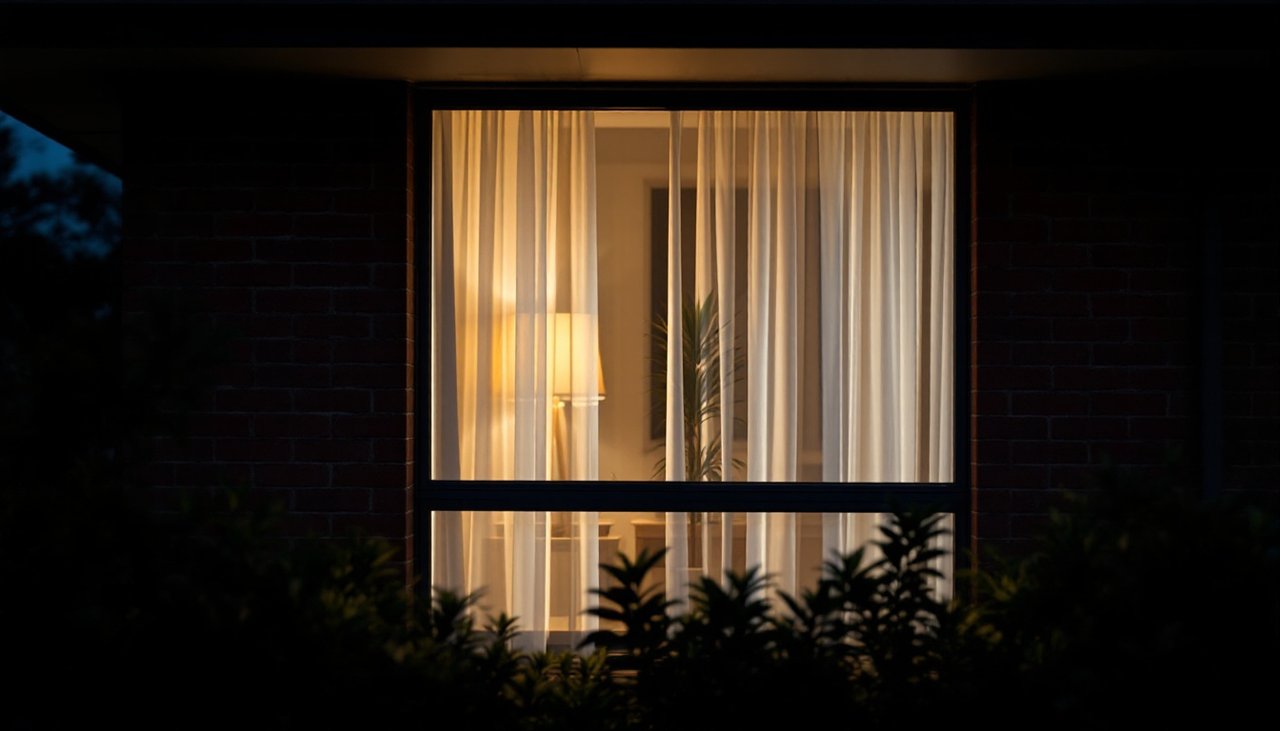
After dark the balance flips. Your lamps and downlights make the room the brighter side, and the street becomes the dark side. Light now passes out through the weave, the fabric turns into a softly lit screen, and people outside can pick up shapes, movement and the outline of furniture. They will not see fine detail, but they will see enough to know who is home and what they are doing.
A quick test we suggest in our showrooms: hold a sheer sample between you and a lamp, then look at it from the darker side of the room. What you see there is roughly what the street sees on a Tuesday night.
| What changes | Daytime (brighter outside) | Night-time (brighter inside) |
|---|---|---|
| What people outside see | A glowing, pale fabric surface | Silhouettes, movement and lamp outlines |
| What you see from inside | Your view, softened | Mostly your own reflection in the fabric |
| Privacy from a sheer alone | Good | Low once lights are on |
| Glare control | Diffuses harsh sun into even light | Not needed, but street lights still show through |
So the honest answer to the night-time question is not about buying a better sheer. It is about what else is on the window when the lights come on.
Voile vs Linen-Look vs Textured Sheers After Dark
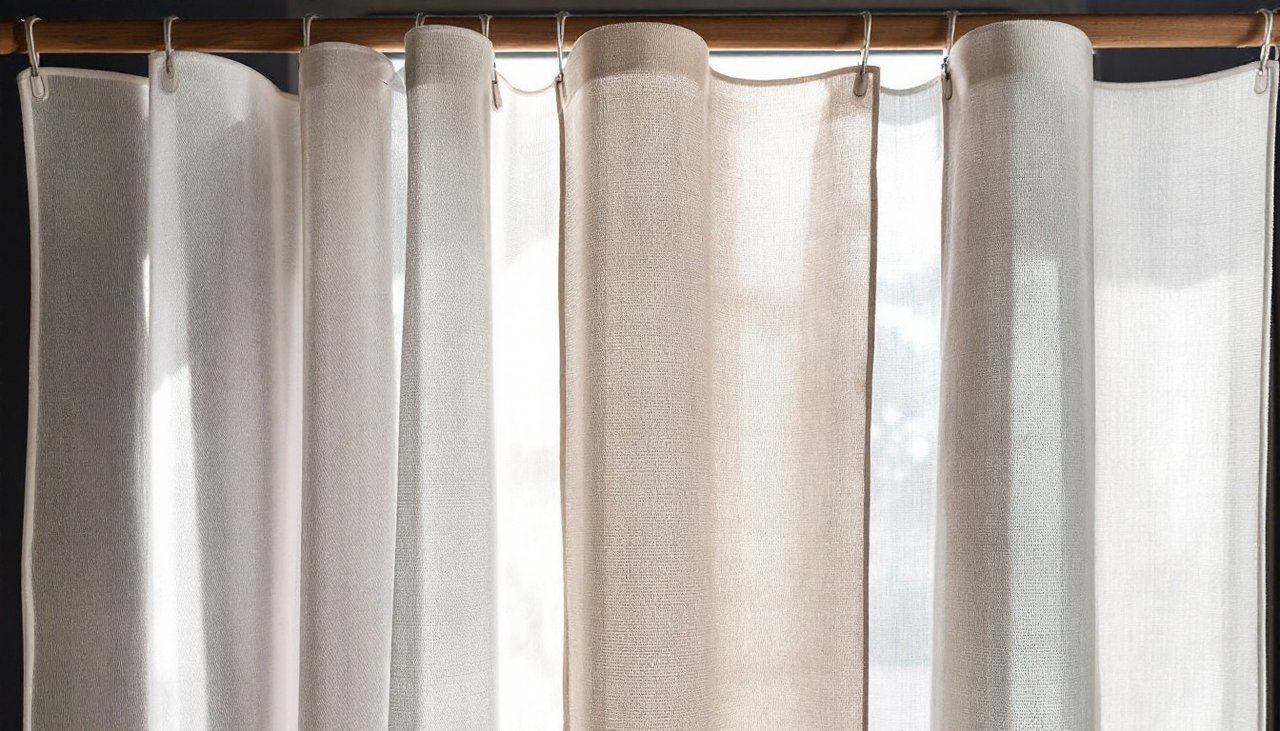
Not every sheer behaves the same once the room is lit. The weave and the yarn change how much of your outline gets through, although none of them turn into a privacy fabric. Here is how the three broad families compare after dark.
| Sheer type | Daylight and view | Night-time privacy on its own | Suits |
|---|---|---|---|
| Fine voile | Brightest room, clearest view | Lowest; shapes read clearly | Rooms that are not overlooked after dark |
| Linen or linen-look | Soft, slightly textured light | A little better; the slubbed yarn breaks up edges | Living areas with a relaxed, natural look |
| Tighter or textured weave | Dimmer, more diffused, less view | Better at blurring shapes, still shows light and movement | Rooms that need more daytime screening |
On the plus side, a tighter weave gives you more daytime privacy, and it can mean fewer layers in a room that is rarely used at night. On the minus side, you give up brightness and view during the day, which is the whole reason most people choose sheers in the first place.
One thing we see often: a tighter weave can look almost solid on a showroom table under bright lights. Take the sample to a window, then to a lamp, before you decide. The lamp test tells you more than the table does.
2x vs 2.5x Fullness: Does Extra Fabric Help at Night?
Fullness is the ratio of fabric width to track width. A sheer made at 2 times fullness uses twice the track length in fabric; at 2.5 times it uses two and a half. On an S-fold or wave heading, that extra fabric sits in a deeper, even ripple along the track.
2x fullness, the good and the not so good. The ripple is lighter and more relaxed, the stack is slimmer when the sheer is open, and it suits heavier or textured fabrics that already have body. The downside at night is that the fabric sits flatter when drawn, so outlines read more clearly through the single layer between folds.
2.5x fullness, the good and the not so good. Deeper folds mean more fabric overlapping at each ripple, which blurs shapes a little more and looks richer from the street and the room. The catches are a wider stack at the side of the window when open and more fabric overall. A very fine voile tends to look sparse at the lower end of the range, so this is often where fine sheers land.
The takeaway: extra fullness softens what people see, but it does not stop light passing through. A 2.5x sheer is still a sheer after dark.
Sheers Alone vs Sheers Plus a Blockout Layer
This is the comparison that actually decides night-time privacy. Sheers alone can be the right call, and we are happy to say so when it is. Plenty of windows do not need a second layer.
| Factor | Sheers alone | Sheer plus blockout layer |
|---|---|---|
| Daytime light and view | Soft light, view kept | Same, with the blockout layer open |
| Night-time privacy | Low once lights are on | Full, with the blockout layer closed |
| Darkness for sleep | Street lights and early sun come through | Dark room for sleeping in |
| Low sun glare on screens | Softened | Stopped when needed |
| Look | Light and airy, one layer | Layered, slightly fuller window |
| Space needed | One track | Two tracks, or a track plus a blind |
| Daily use | One layer to draw | Two layers to manage, motorisation is an option |
Sheers alone make sense when a room is not overlooked after dark, such as an upstairs window facing a back garden, a room you rarely use at night, or a space where another window treatment already handles darkness. If you are still choosing that front layer, our sheer curtains page shows the S-fold and linen options.
A second layer earns its place in bedrooms, street-facing lounges and any room with close neighbours. Bedrooms in particular benefit, and healthdirect's sleep guidance notes that a bedroom should be quiet and dark. A sheer on its own will not give you dark.
Blockout Roller Blind vs Blockout Curtain on a Double Track
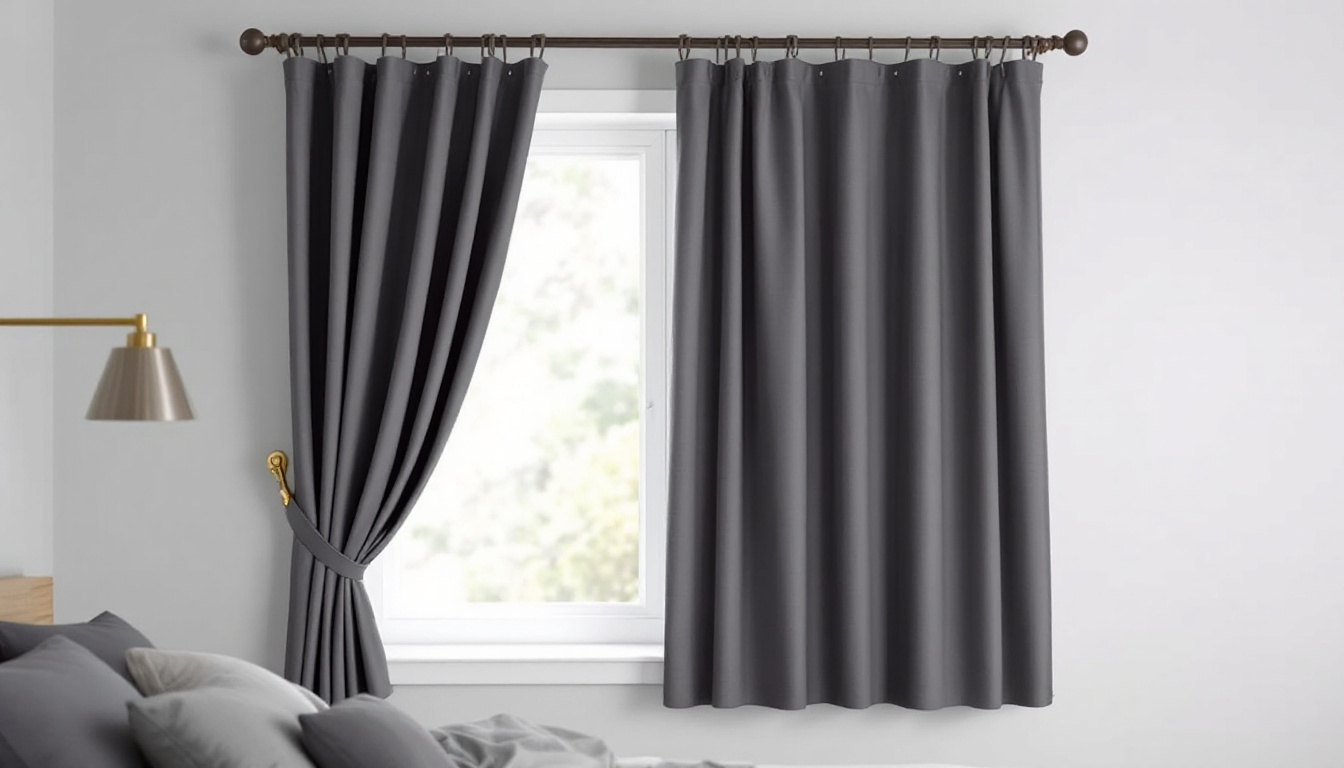
If you are adding a layer behind your sheer, there are two setups we recommend. Both keep the sheer you love at the front of the window and add proper darkness behind it. They differ in fit, look and how much light sneaks around the edges.
| Factor | Sheer plus blockout roller blind | Sheer plus blockout curtain (double track) |
|---|---|---|
| How it is fitted | Roller blind in the window recess or on the frame, sheer on a track in front | Two tracks side by side, one for the sheer, one for the blockout curtain |
| Edge light | Recess fit needs a side clearance of about 10 to 15 mm each side, so thin lines of light can show; a face fit over the frame narrows this | Curtain can run past the window edges, so the sides are well covered |
| Look when open | Blind rolls up out of sight, the sheer reads on its own | Blockout curtain stacks beside the sheer, more fabric on show |
| Space needed | Recess depth or frame face for the blind | Wall space either side for two stacks and room for two tracks |
| Feel in the room | Clean, crisp and minimal | Soft fabric on both layers |
| Often chosen for | Kids rooms, media rooms, windows with deep recesses | Master bedrooms, lounges, large sliding doors |
The roller blind route. It is tidy and nearly invisible when rolled up, so the sheer does all the styling during the day. It suits windows with a usable recess. The catch is edge light: a blind fitted inside the recess needs that 10 to 15 mm clearance to roll smoothly, and in a room where you want real darkness you may notice those slivers at bedtime.
The double track route. Two layers of fabric look generous and the blockout curtain can extend beyond the frame, which helps with darkness at the sides. The catch is width: when both are open you have two stacks beside the window, so it needs wall space, and the window looks more dressed. Our blockout curtains page shows the curtain side of this pairing.
In our showrooms, the choice usually comes down to the room. Where the look should stay light, the roller blind wins; where the room wants softness and fuller edge coverage, the double track wins.
Blockout vs Blackout, Sheer vs Sunscreen: Related Searches Untangled
A few searches sit close to this one and get mixed up. Here is how they differ.
- Blockout vs blackout. In Australia these are the same thing. Blockout is the usual local term and blackout is the spelling you will see from overseas; there is no functional difference.
- Sheer curtain vs sunscreen blind. A sunscreen roller blind has an openness of 1% to 10%. A lower openness screens more by day, but at night it behaves much like a sheer and shows shapes when the room is lit. Putting a sunscreen blind behind a sheer gives you two soft layers and still no night-time privacy. A sunscreen blind's natural partner is a blockout blind in a day and night double roller.
- Sheer vs voile. Voile is one type of sheer fabric, usually the finest and most open. Every voile is a sheer, but not every sheer is a voile.
- Privacy sheers or day and night sheers. These names usually describe a denser weave. They blur more by day and soften shapes at night, but once your lights are on they still let light and movement through.
Which Night-Time Setup Suits Your Room?
Use this as a quick decision guide, window by window.
- Choose sheers alone if the window is not overlooked at night, the room is mostly used in daylight, or darkness is handled some other way.
- Choose a sheer plus a blockout roller blind if you want a clean, minimal look, the window has a usable recess, and a thin line of edge light at night will not bother you.
- Choose a sheer plus a blockout curtain on a double track if it is a bedroom or lounge where you want soft fabric on both layers, better side coverage and you have wall space for the stacks.
- Skip sheer plus sunscreen if night privacy is the goal; that pairing leaves you with two see through layers after dark.
Still torn between two? Plenty of homes mix them: sheers alone in the kitchen, sheer and roller blind in the kids rooms, double track in the main bedroom and lounge.
Every evening the lamps go on is another evening the street can see in. Because each sheer, blind and curtain is made to measure, the sooner we measure, the sooner the new layer is on your window. Use the quote form on our contact page to book a free measure at home, or visit one of our 19 showrooms across Australia to try the lamp test for yourself.
Sheer Privacy Day vs Night: Quick Answers
Can people see through sheer curtains at night?
Yes, once your room is brighter than outside. People will usually see shapes, movement and lamps rather than fine detail. For real privacy after dark, add a blockout roller blind or blockout curtain behind the sheer.
Will a thicker or textured sheer be private at night?
A tighter or textured weave blurs shapes more, but it still lets light through and shows silhouettes when the lights are on. It also takes away daylight and view. Keeping the sheer you like and adding a blockout layer is usually more effective.
Does 2.5 times fullness make sheers more private?
Deeper folds blur outlines a little more than 2 times fullness does. Extra fabric does not stop light passing through, so it will not make a sheer private at night on its own.
Is a sunscreen blind behind a sheer enough at night?
Not for privacy. Sunscreen fabric has an openness of 1% to 10%, so like a sheer it shows shapes when the room is lit. Pair the sheer with a blockout roller blind or blockout curtain instead.
Are blockout and blackout curtains different?
No. In Australia they describe the same product, and blockout is the more common local term.