Battery vs Hardwired Motorised Curtains: Get It Right
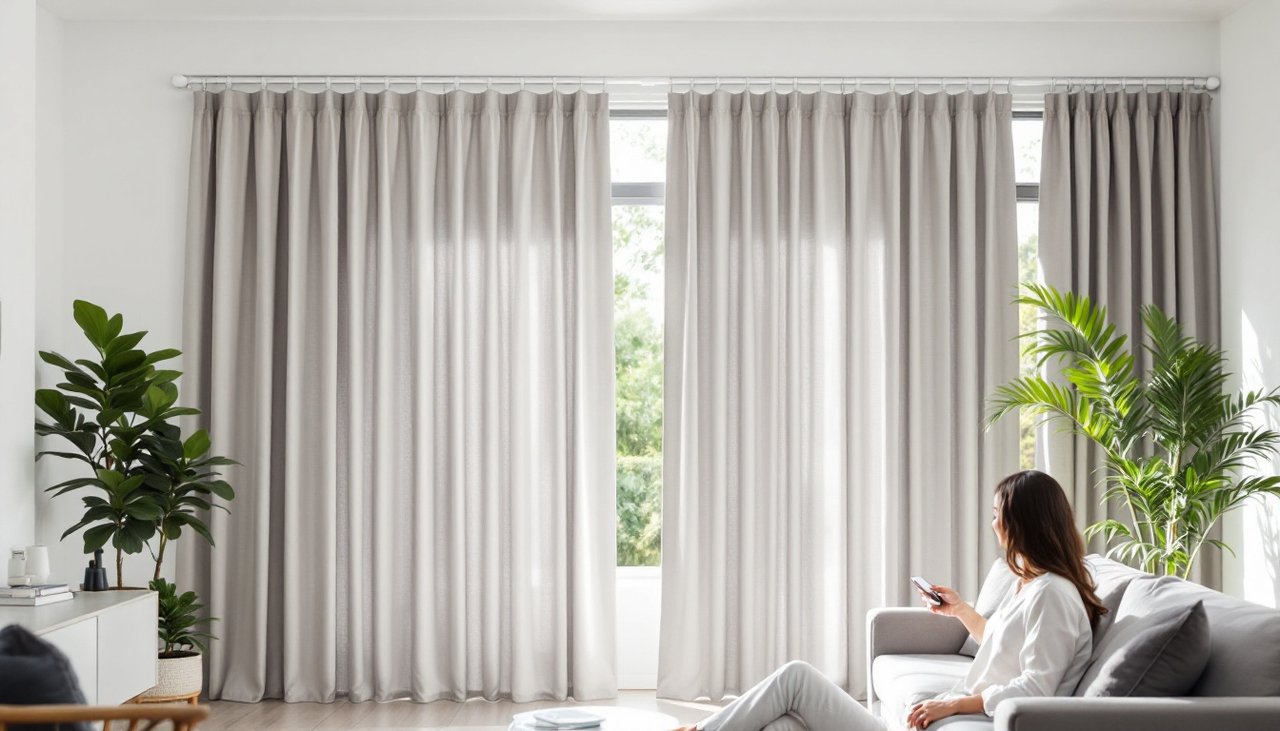
You have finally said yes to motorised curtains for that big living room window. The fabric is chosen, the S fold heading looks right, and then someone asks a question you had not thought about: battery or hardwired? Suddenly you are standing in front of a freshly painted wall, wondering whether "hardwired" means cutting into it, and whether "battery" means climbing a ladder every few weeks with a charger in your hand.
That moment comes up at our showrooms all the time, and it is a fair thing to worry about. Pick the wrong power option and you either end up with a lead dangling down a feature window or a wall that has to be opened after the painters have gone. Pick the right one and you stop thinking about it altogether. This guide to battery vs hardwired motorised curtains walks through the questions people actually ask us, in the order they tend to ask them, so you can walk into your measure already knowing which way you lean.
If you would like to see the tracks, remotes and control options before you read on, the motorised curtains range shows how the whole system works, and you can book a free measure straight from that page.
What does battery or hardwired actually mean for motorised curtains?
Every motorised curtain or blind has a small motor that drives the track or the roller. The only real difference between the options is where that motor gets its power.
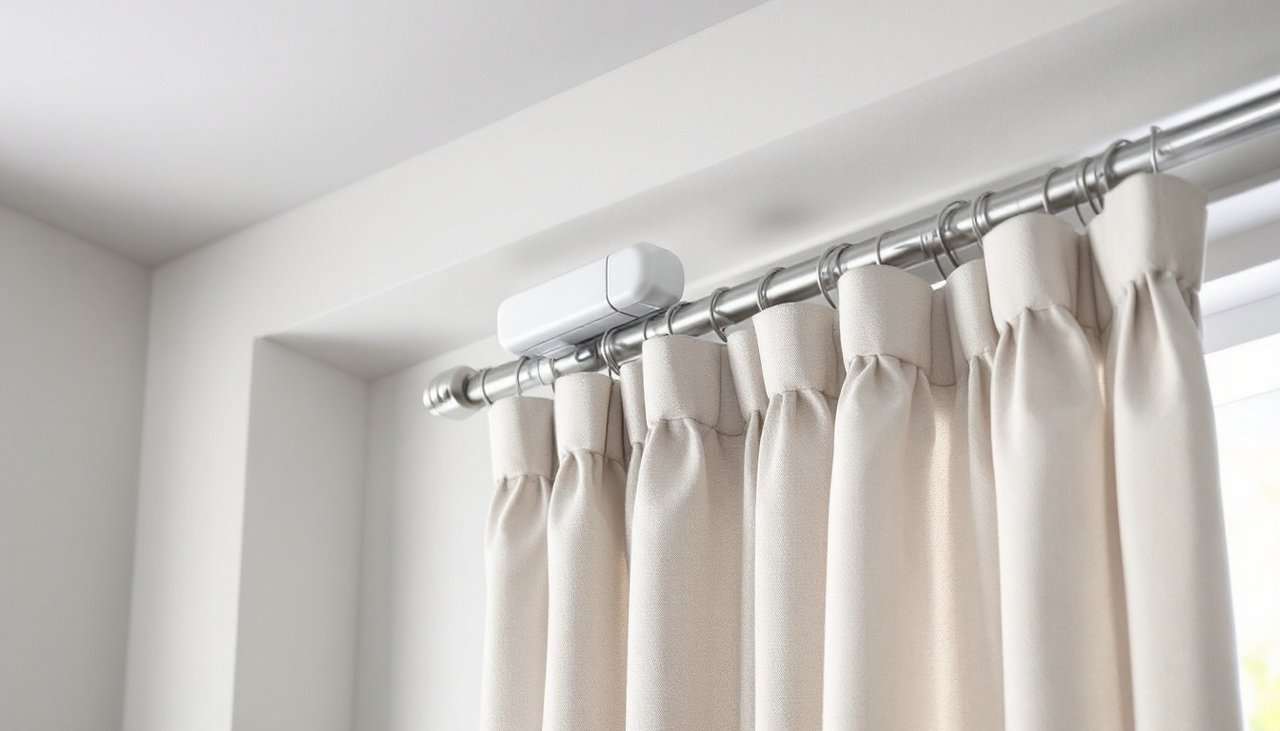
A battery motor carries its own rechargeable lithium battery. Nothing connects it to the wall, so it can go onto almost any window without an electrician. When the battery runs low you recharge it, and then it carries on.
A hardwired motor is connected to your home's 240 volt mains supply through a power point or a fixed cable near the head of the window. Once it is in, there is no battery to look after. The catch is that fixed wiring in Australia has to be done by a licensed electrician, so it needs planning, and it is far easier when walls and ceilings are still open.
There is also a third option people often forget: solar charged. A small panel sits against the glass and tops up the battery from daylight, so it behaves like a battery motor that rarely needs charging by hand.
The curtain itself does not change. The same made to measure fabric, the same heading and the same remote, app or voice control sit on top of whichever power source suits the window.
Are electric curtains, motorised curtains and smart curtains the same thing?
Mostly, yes, and this trips a lot of people up when they search. "Electric curtains" and "motorised curtains" describe the same product: a curtain on a track that a motor opens and closes. Australians tend to say motorised, while plenty of online shops say electric, but you are looking at the same thing either way. The same goes for electric blinds and motorised blinds.
"Smart curtains" is a slightly different idea. It describes how the motor is controlled, not how it is powered. A motorised curtain becomes "smart" when you add a hub so it can run on schedules from your phone or respond to Amazon Alexa or Google Home. A battery motor can be smart. A hardwired motor can be smart. A motor on a simple handheld remote is neither more nor less motorised than one on an app.
One more mix up worth clearing: "wireless" in a product description usually means the control is wireless, such as a remote or app. It does not automatically mean the motor runs on a battery. If a listing says wireless, check whether it still needs a power point.
So the power question and the control question are two separate decisions. Settle the power first, because it affects the wall. Control can be added or changed later.
How do battery, hardwired and solar motors compare side by side?
Here is the comparison we talk through at most measures. It covers motorised curtains and motorised blinds alike.
| What you are weighing | Rechargeable battery | Hardwired (mains) | Solar charged |
|---|---|---|---|
| Power source | Built in lithium battery | 240 volt mains supply | Battery topped up by a small panel |
| Wiring needed | None | Power point or fixed cable at the window head | None |
| Electrician needed | No | Yes, a licensed electrician for fixed wiring | No |
| Ongoing upkeep | Recharge every few months, depending on use | Nothing to recharge | Occasional top up on dull windows |
| Open and close cycles per charge | Depends on the specific motor model and the curtain weight | Not applicable, no battery | Depends on the motor model and how much daylight the panel gets |
| Curtain weight the motor can carry | Depends on the specific motor model; sized to your fabric at the measure | Depends on the specific motor model; sized to your fabric at the measure | Depends on the specific motor model; sized to your fabric at the measure |
| During a power outage | Keeps working | Pauses until power returns; most can be moved by hand | Keeps working |
| Easiest time to add | Any time, including finished homes | New builds and renovations, before walls are closed | Any time, on windows with good daylight |
| Suits | Finished rooms, retrofits, single windows | Heavy or very wide curtains, whole house systems | Sunny, hard to reach windows |
A few things the table cannot tell you on its own. First, how often a battery needs charging depends on how heavy the curtain is and how many times a day it runs, so a lined curtain made up at 2 to 2.5 times the window width works the motor harder than a light sheer. Second, we have deliberately not put a fixed number of opens per charge or a maximum curtain weight in the table, because both figures depend on the specific motor model. At your measure we size the track and motor to the weight and width of the fabric you choose, and tell you what to expect from the model we recommend. Third, the "easiest time to add" row is often the deciding one. The same window can suit either option; what changes the answer is whether the wall is open or finished.
When does a rechargeable battery motor make more sense?
For most finished homes, battery is where we start the conversation, simply because it asks the least of your house.
It suits you if the room is already painted and you do not want anyone cutting into plasterboard. It suits single windows, such as a bedroom where you want blockout curtains to close at a set time each night, or a lounge where one wide window gets the afternoon glare. It also suits people who are not sure yet how much of the house they want to motorise. Starting with one or two battery motors lets you live with the setup before committing to more.
The catch is upkeep. A battery motor needs recharging every few months, which usually means bringing a charging lead up to the motor at the head of the window. Exactly how many opens and closes you get from one charge depends on the motor model and the fabric it is moving, so we talk it through for your window rather than promise a single figure. On a standard height window a recharge is a quick job. On a stairwell or double height window it is a ladder job, and that is where we start asking whether solar or hardwired would be kinder to you over the years.
In our experience, battery motors suit people who know about the recharge before they choose them. It is not a hassle when you expect it. It is only annoying when it comes as a surprise.
When is hardwiring worth the extra step?
Hardwiring earns its place when the window is hard to reach, the curtain is heavy, or the house is still being built or renovated.
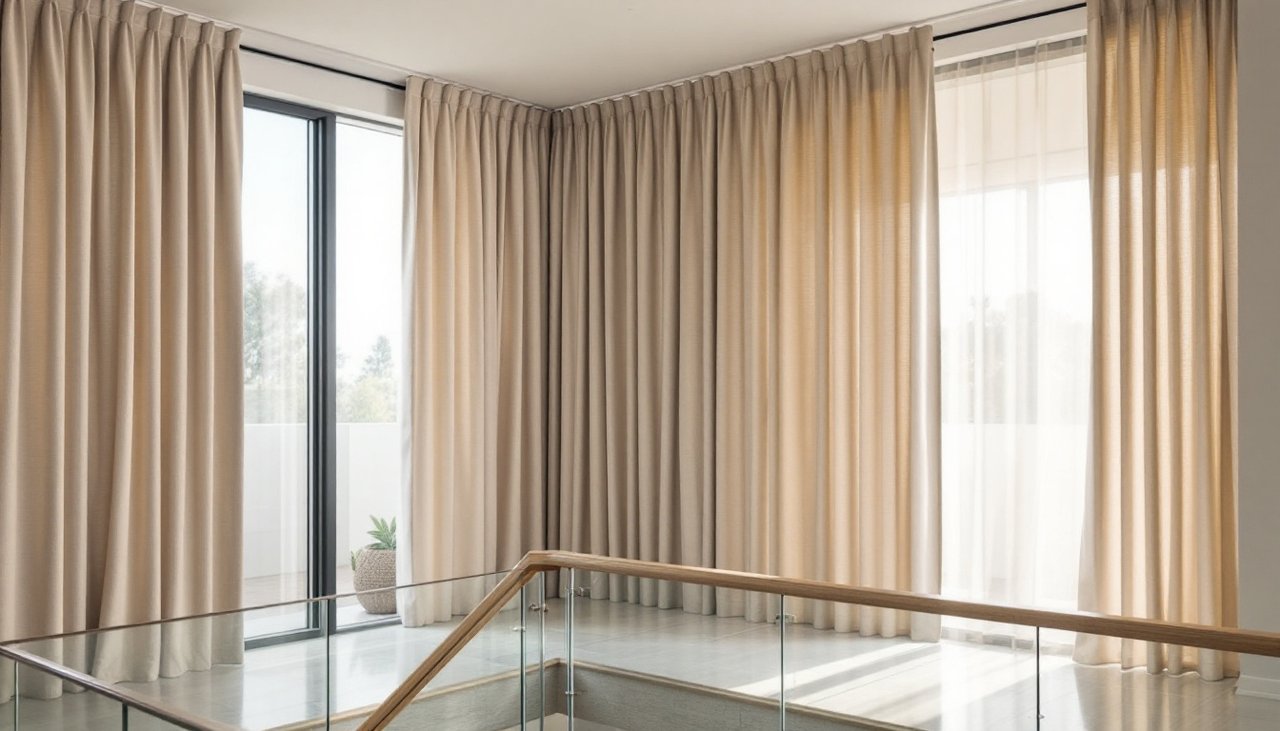
Take the tall void window. A Google review featured on our motorised curtains page describes one: "Ben's Curtains provided us great customised electronic open and close curtain service for a 6 metre high ceiling void space." A window like that is exactly where a set and forget power supply makes life easier, because nobody wants to recharge a motor six metres up. With mains power, the curtain just runs, morning and night, with no battery to look after.
Hardwiring also suits very wide spans and heavy fabrics. When a whole wall of blockout curtains glides across on one track, the motor is doing real work every time, and a mains supply means there is no battery to run low halfway through a long evening.
The key is timing. In a new build or a renovation, your electrician can run a cable to the head of each window while the frame is open, at very little extra effort. Once the walls are lined and painted, the same job means patching and repainting. So if you are building, we suggest you decide on motorisation before the electrician's rough in stage, even if the curtains themselves come much later.
If you are unsure, ask your electrician to run cabling to the key windows anyway. An unused cable behind a wall sits there quietly, and it keeps the hardwired option open.
What happens during a power outage or when a battery goes flat?
This is one of the most common worries we hear at measures, and it is a fair one to raise before you choose.
Battery and solar motors keep working through an outage because they do not rely on the mains at all. Your curtains and blinds open and close as normal while the rest of the house is dark.
Hardwired motors pause while the power is out. Most can still be moved by hand, so you are not stuck with the curtain closed on a sunny morning, and they go back to normal as soon as the power comes back.
A flat battery works the other way around. The motor slows or stops responding to the remote, which is your cue to recharge it. If you notice the curtain moving more slowly than usual, that is a good time to charge it.
Neither scenario leaves you without a working window for long. It is simply worth knowing which one you would rather handle: the occasional recharge, or the occasional outage.
Does the power choice change for motorised blinds versus curtains?
The same three options apply, but the balance tips slightly differently.
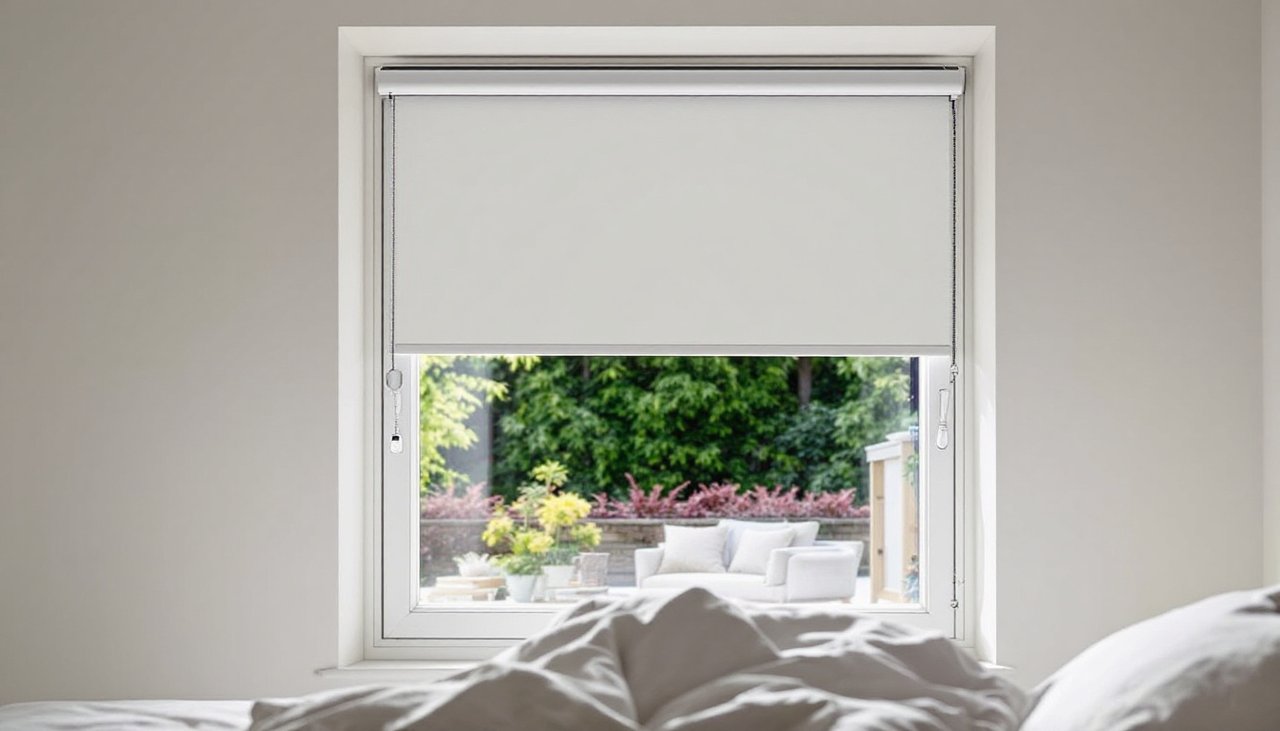
Blinds are usually lighter than a full length curtain, so a battery motor in a roller or blockout blind tends to go longer between charges. Blinds also sit inside or right against the window frame, which makes solar charging easy on a sunny aspect: the panel tucks against the glass behind the fabric. That is why solar comes up far more often with blinds than with curtains.
Curtains, on the other hand, can be much wider and heavier, especially when you layer a sheer and a blockout on a double track. That is where hardwiring starts to look more attractive, because two motors on a heavy double track do a lot of work between them.
Aspect matters for solar in both cases. In Australia, north facing windows get the most direct sun. A south facing window in Brisbane, Adelaide or Perth sees far less, so a solar panel there may not keep up, and plain battery or hardwired is the safer call.
If you are weighing up blinds as well, our motorised blinds page covers which blind styles can be motorised and how the controls work.
How do you decide which power option suits each room?
You do not have to pick one option for the whole house. Plenty of homes end up with a mix. Here is a simple way to think it through, room by room.
| If your window is... | Start by considering | Why |
|---|---|---|
| In a finished room at normal height | Battery | No wiring, and recharging is quick when you can reach it |
| Double height, void or stairwell | Hardwired, or solar if it gets good sun | Avoids ladder work every few months |
| Part of a new build or renovation | Hardwired | Cabling is easiest before walls are closed |
| A very wide span or heavy double track | Hardwired | Heavier loads work the motor harder |
| North facing with a blind in the frame | Solar | Daylight keeps the battery topped up |
| A nursery or kids' room | Any of the three | Every motorised option removes hanging cords |
That last row deserves a note. Child safety around blind cords is serious enough that the ACCC enforces a mandatory safety standard for corded internal window coverings. A motorised curtain or blind has no chain or cord to hang down, whichever way it is powered, so the power choice does not change the safety benefit.
When a window sits between two answers, we usually lean toward whichever option means you will think about it least over the next ten years.
What should you have ready before your free measure?
A few details make the measure much quicker and help us recommend the right power option on the day.
- Whether the room is finished, or still being built or renovated
- Which windows are hard to reach, and roughly how high they are
- Which way the main windows face, if you are curious about solar
- Whether you already use Alexa, Google Home or a smart home hub
- Whether there is a power point near the top of any window you want motorised
Photos help too. A quick shot of each window, taken from across the room, shows us the height, the wall above and any obstacles like cornices or downlights.
At the measure we check the span and the weight of the fabric you have chosen, then size the track and motor to suit. Before we leave after installation, we pair every motor with your remote, app or schedule and show you how it works, and our 48 hour after sales support is there if anything needs a second look.
With 19 showrooms across Queensland, New South Wales, Victoria, South Australia and Western Australia, you can also come in and hear a motor running before you decide. When you are ready, book a free measure and quote and bring your window photos along. We will tell you which power option suits each window, and why.
What quick questions do we hear at the showroom?
Can I switch from battery to hardwired later?
Often, yes, but it depends on the motor and on getting power to the window head. Switching later usually means an electrician running a cable into a finished wall, which is why we suggest deciding early if you are renovating.
Are motorised curtains noisy?
Modern motors are quiet, with a smooth, low sound as the fabric moves rather than a loud mechanical noise. That makes them comfortable in bedrooms, even on an early morning schedule. You can hear one running at your measure or in a showroom.
Can I motorise sheer curtains as well as blockout curtains?
Yes. Motorisation works across the curtain range, including sheers, blockout and S fold curtains. You can also run a sheer and a blockout on a double track, each with its own motor, so you can open one layer and keep the other closed.
Do battery motorised blinds and curtains still work with voice control?
Yes. Voice and app control come from adding a hub, not from the power source, so battery, hardwired and solar motors can all be set up to work with Amazon Alexa or Google Home.