What Should You Check Before Ordering Motorised Sheer Curtains?
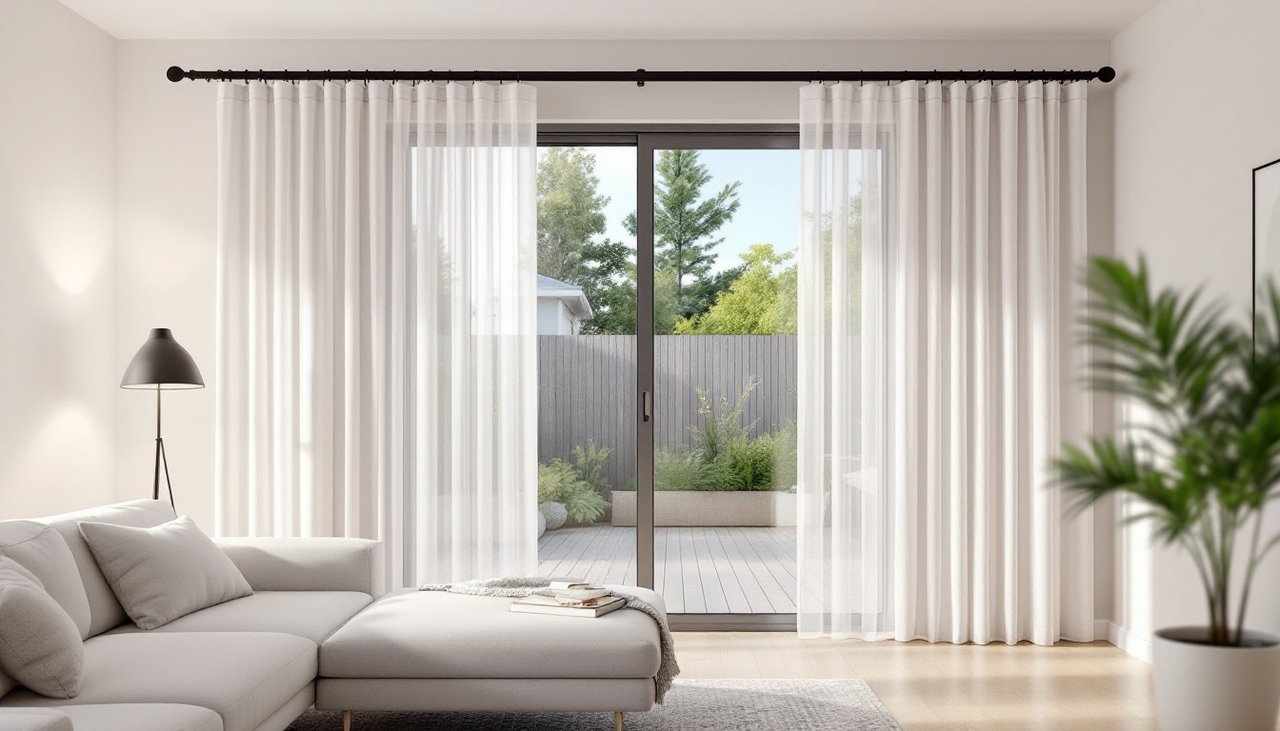
It is 7am, the sun is already pouring across the living room, and the sheers are still bunched at one end of the track because nobody wanted to walk over and drag them across the glass. By evening it happens again in reverse. You love the soft light sheers give you. You just do not love being the motor.
That is usually the moment people start looking at motorised sheer curtains. The good news is that sheers are one of the easiest fabrics to motorise well. The catch is that a few small decisions made early (where the power comes from, how far the track runs, what sits behind the sheer) decide whether the finished result glides quietly for years or feels like a compromise from day one.
This checklist walks through those decisions in the order we cover them when we measure in homes. Work through it before you book a free in home measure and you will arrive at your quote conversation with most of the answers already in hand, ready to have every number confirmed on your actual windows so nothing on your quote is a guess.
1. Decide What Your Sheers Need to Do Each Day
Before anyone talks motors, get clear on the job. Sheers filter daylight, soften glare and give you daytime privacy while you still see the garden. They do not darken a room, and at night, with lights on inside, people outside can see silhouettes through them.
So ask yourself three questions. Do the sheers mostly stay closed through the day and open in the evening, or the other way round? Are they on a street facing window where privacy matters, or a back deck where it is all about the view? And will they move once a day or ten times a day?
Frequency matters more than people expect. A sheer that opens at sunrise and closes at sunset is a very different workload from one on a sliding door that the kids use as a hallway. If you are motorising in stages, start with the window that moves most, not the one that is biggest.
Action item: write down each window, how often it will move, and whether its job is light, privacy or view.
2. Measure the Track Run and Stack Space
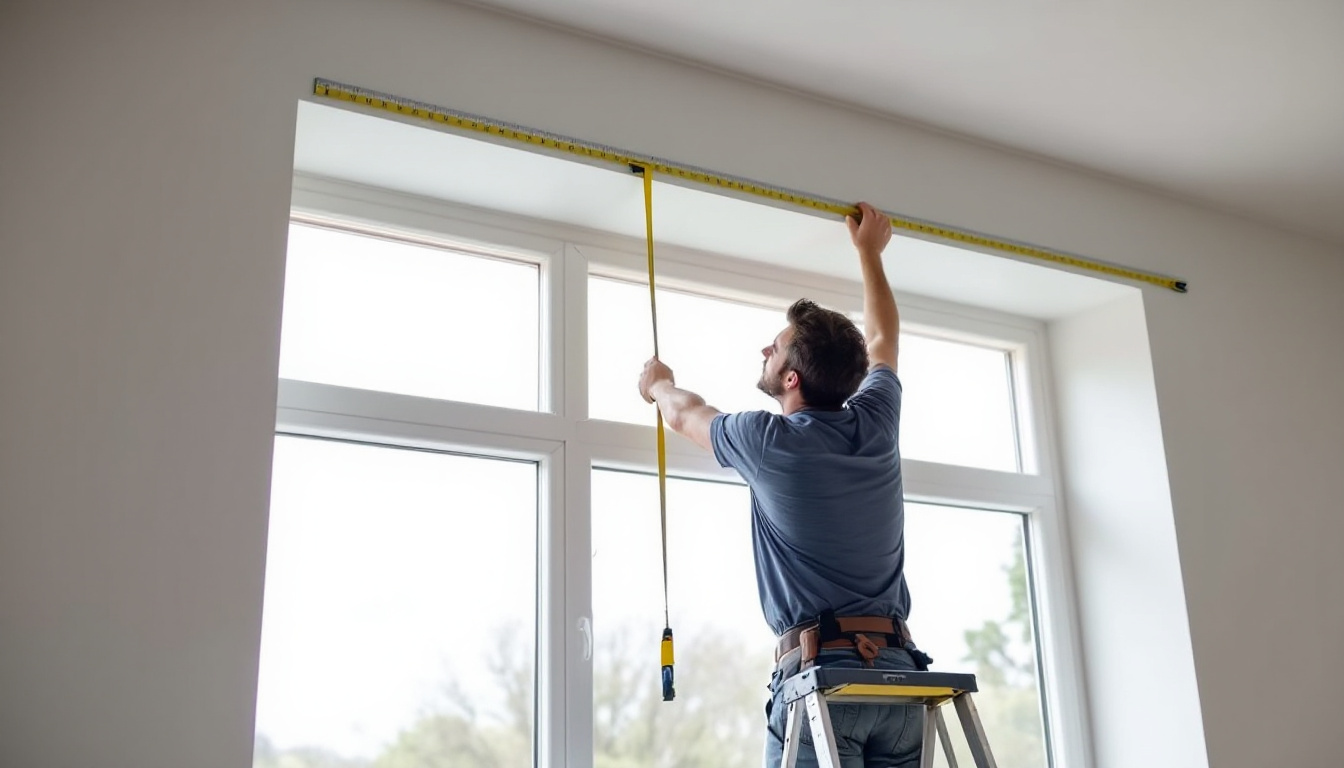
Motorised sheers run on a powered track, and the track length sets almost everything else. As a guide, the track usually extends a little past each side of the window frame so the fabric can stack clear of the glass when open. How far depends on how much fabric has to gather at each end, which is why we work it out on site rather than from a rule of thumb. On a wide sliding door that extra run is what stops the stacked sheer from blocking the opening.
Next, decide how the sheer opens. A one way draw stacks everything to one side, which suits a door that opens on that side. A centre split sends half to each end, which keeps both stacks slimmer and is common on wide living room windows. Motorised tracks handle both, but the choice needs to be made before the track is cut.
Then look up. Ceiling fixed tracks let the sheer fall from the highest point and make a ceiling look taller. Wall brackets work too, but leave a gap above the fabric where light leaks through. For the drop, sheers are usually finished just clear of the floor so the hem floats and does not drag as the motor moves it. Floors are rarely perfectly level, so the drop is checked at more than one point across the window.
Finally, check that the motor head has room. It sits at one end of the track, so a cornice, a downlight or a wall return right at that end needs to be noted. We check this on site because it is one of the few things that can quietly change the layout.
Action item: note the width of each window, which side the door opens, and whether there is anything fixed to the ceiling within the stack zone.
3. Choose How the Motor Gets Its Power
Every motorised track needs a power source at the motor end, and for sheers the choice usually comes down to your walls rather than the fabric. A battery motor suits a retrofit in a finished room, because nothing has to be chased into the wall or patched afterwards. A hardwired motor makes more sense where a licensed electrician can run power to the motor end during a build or renovation, or where a power point already sits close to the track.
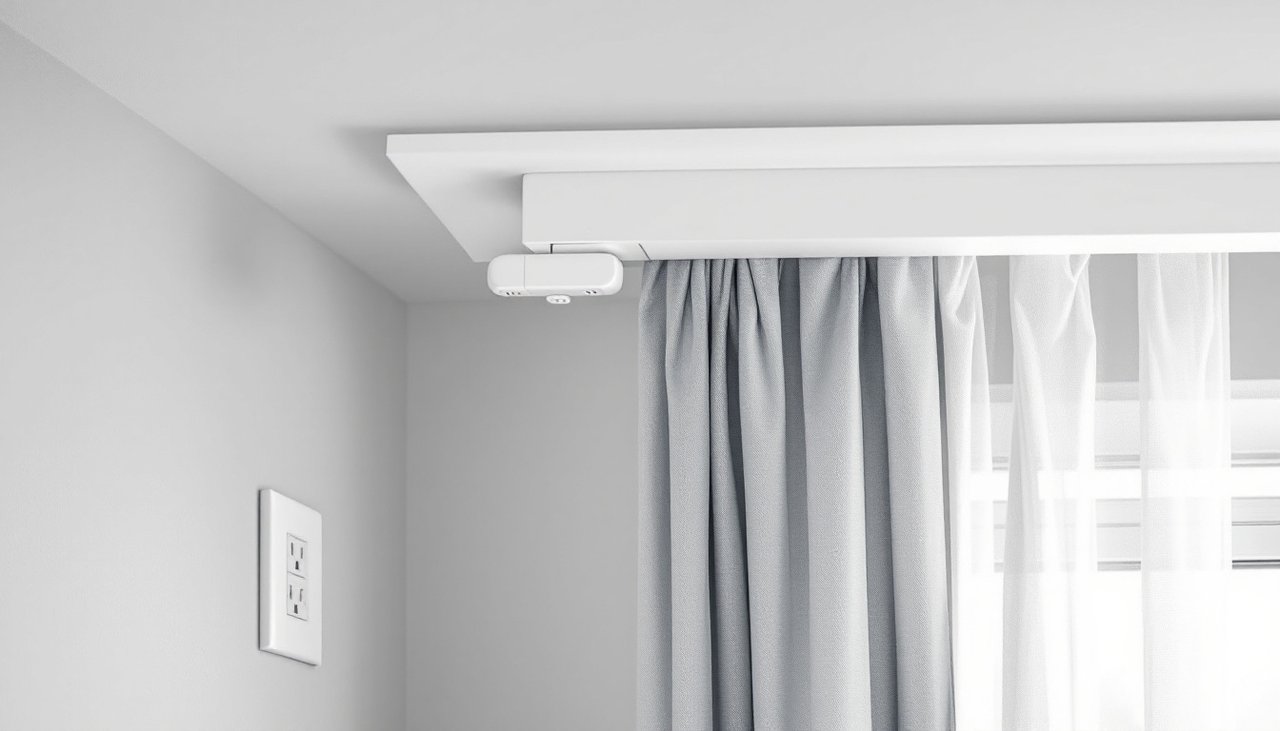
Because sheer fabric is light, the load on the motor stays low either way, so let the room and your wiring options make the call. If you want the fuller picture before deciding, our guide to powering motorised curtains and blinds goes deeper.
Action item: note the power choice for each window, and if any need fixed wiring, book your licensed electrician before install day.
4. Pick a Heading and Fullness That Glide Well
Not every heading behaves the same on a motor. The S fold heading (also called wave) is the natural match for motorised sheers because the carriers are evenly spaced on the track, so the fabric folds into the same soft ripples every time it opens and closes. Pinch pleat can be motorised too, but the folds are more structured and the stack tends to sit a little bulkier.
Fullness is the other number to settle. Sheers usually look right at around 2 to 2.5 times the track width in fabric. At the lower end the sheer looks flatter and more contemporary; at the upper end you get deeper, richer folds, but also a wider stack when open. On a motor, the main thing is consistency, because the carrier spacing is set to match the fabric.
Fabric choice plays in here as well. Linen look sheers have texture and a relaxed drape. Voile is finer and lighter. Both run well on a motorised track; it comes down to the look you want and how much light you want filtered.
Action item: choose your heading and ask for the fullness to be written on your quote so you can compare like with like.
5. Plan the Layer Behind the Sheer: Double Track vs Roller Blind
Here is where a lot of plans go wrong. Because sheers are soft and see through, most bedrooms and many living rooms need a second, solid layer for night time privacy and darkness. The right partner for a sheer is a blockout layer, either blockout curtains on a double track or a blockout roller blind closer to the glass.
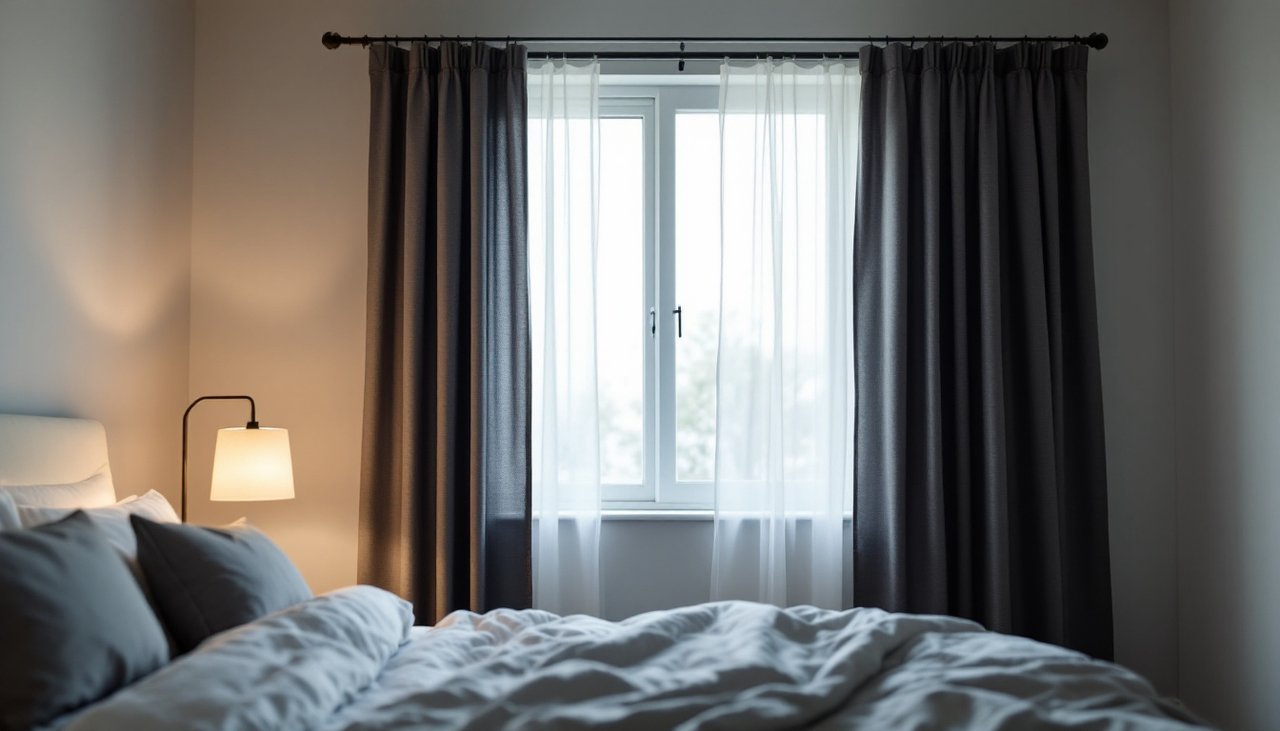
A double track lets you motorise both layers: sheers on the room side, blockout behind. Each track runs its own motor, and they can usually be grouped so one press opens the blockout and leaves the sheer closed, which is the classic morning setting. A blockout roller blind behind the sheer is a slimmer option where ceiling space is tight, and blinds can be motorised as well. Keep in mind they are different mechanisms: a curtain track moves fabric sideways, while a roller blind winds up and down on a tube. Plenty of homes use both, for example motorised sheers in the living room and motorised blockout rollers in the bedrooms.
What we steer people away from is pairing a sheer with a sunscreen roller blind as the second layer. Both are soft layers, so you end up with two filters and still no real privacy after dark. Sunscreen blinds have their own job, usually as part of a day and night double roller.
Action item: for every window where sheers alone will not give enough privacy at night, choose blockout curtain or blockout blind as the second layer, and decide whether it is motorised too.
6. Set Up Your Controls, Scenes and Timers
Once the hardware is sorted, think about how you will actually press the button. Most motorised tracks come with a handheld remote, and many can also run from a wall switch, a phone app or a smart home hub, depending on the motor system you choose.
Timers are where motorised sheers really earn their keep. A morning timer that draws the blockout back and leaves the sheer closed gives you soft daylight before you are out of bed. An afternoon timer can close the sheers on a west facing window before the glare hits the TV. Scenes let one tap move several windows at once, which is handy for open plan rooms with three or four sets. Whether timers and scenes run from the remote, a hub or the app depends on the motor system, so ask which setup yours uses.
Keep it simple to start. Plenty of households begin with a remote and one or two timers, then add app control later once they know how they live with it.
Action item: list the two or three moments in your day you want the sheers to move on their own, and tell us which control style you prefer.
7. Prepare the Room for Measure and Install Day
A little preparation makes both visits quicker. For the measure, clear access to each window and have your list from the steps above handy. If any windows are hardwired, have your electrician confirm where the power will come out, or book them to run it before installation.
On install day, move furniture back from the window by about a metre and take down any old tracks or rods if you are comfortable doing so (or let us know and we will plan for it). Once the tracks are up and the sheers are hung, the motors are set with their open and close limits, paired to the remote and tested through a few full runs.
Ask for a quick walkthrough before the installer leaves: how to recharge a battery motor if you have one, how to reset a limit, and how to pair a new remote. Knowing the basics spares you a call later.
Action item: clear the windows, confirm any electrical work is done, and ask for the walkthrough on the day.
8. Book a Free Measure and Get the Numbers Confirmed
Every step above comes down to a few measurements and a few choices, and all of them are easier to settle standing at your own window. Our team measures for free, and at the measure we can talk through fabric choices, power, track layout and the layer behind before you commit. Once the measurements and choices are confirmed, your curtains and sheers are made to measure in our own workshop, and the tracks and motors are supplied, fitted and set up by our installers.
Action item: have a look at our motorised curtains range, then bring this checklist along when you book your free measure and quote.
Quick Answers Before You Book
Can existing sheer curtains be motorised?
Sometimes. The sheer usually needs to be on a heading that suits a motorised track, such as S fold, and the old track normally gets replaced with a powered one. We check the fabric and heading at the measure and let you know what can be reused.
Are motorised sheer curtains noisy?
Modern curtain motors are designed to run quietly, and light sheer fabric puts little load on them. Correct track fixing and limit setting on install day also help keep the movement smooth.
What affects the price of motorised sheer curtains?
The main factors are window width and drop, the fabric you choose, the fullness, the track and motor type, whether you motorise one or two layers, and how complex the installation is. Hardwired motors also involve your electrician's work.
Do I need Wi-Fi for motorised sheers?
Not for basic use. A remote or wall switch works without it. App and voice control generally need a hub or Wi-Fi, and whether timers rely on the app depends on the motor system you choose.