Curtains or Blinds: Which Is Right for Each Room in Your Home?
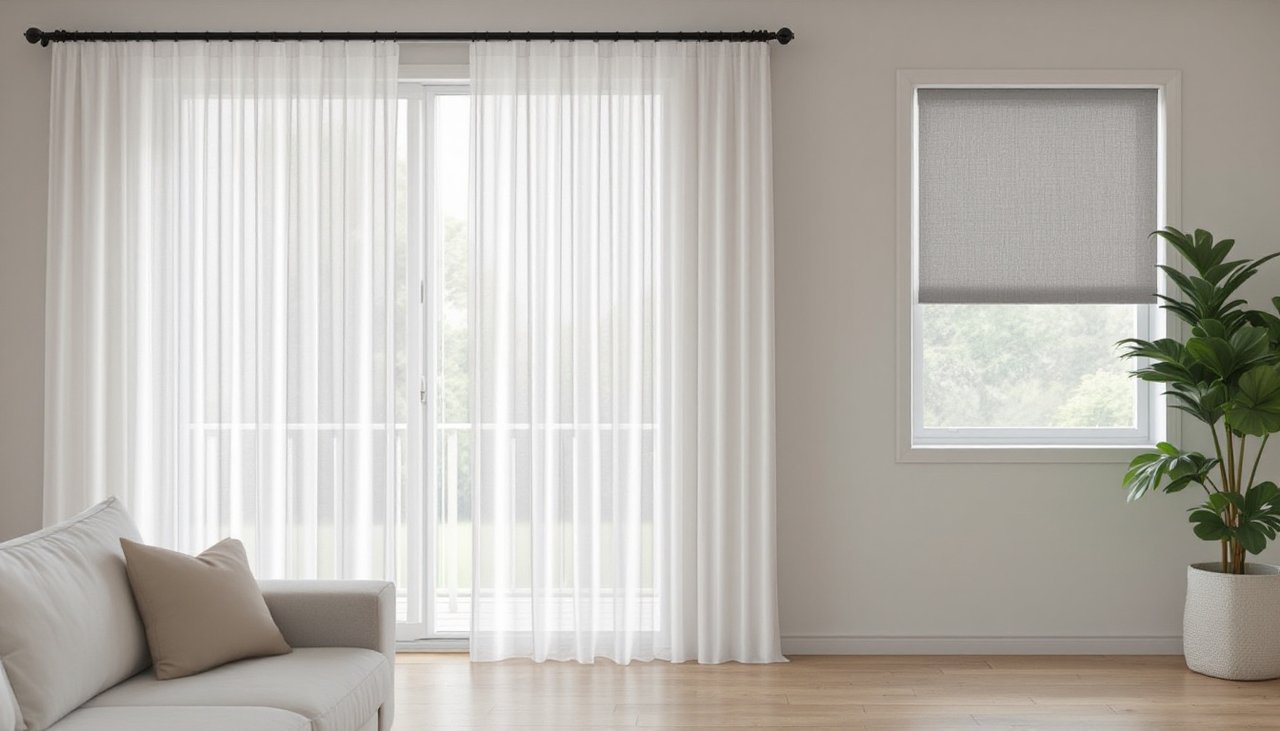
The boxes are finally unpacked, the bed is in the right spot, and the bare bedroom window is still staring back at you. At dinner a friend said curtains, obviously. Your sister swears by blinds. The neighbour across the fence can see straight in the moment the lamp goes on, and the early sun takes care of the rest. So you type curtains or blinds into your phone, and every answer seems to come from someone who only sells one of them.
Here is the honest version from people who measure windows every week: neither one wins everywhere. Curtains and blinds solve different problems, and the right pick depends on the room, the window and how you use the space. Below we compare them side by side on light, privacy, fit, cleaning and motorisation, give both sides a fair hearing, and finish with a room by room decision guide.
If one window is already annoying you every morning, do not wait for the perfect answer to arrive on its own. Book a free in home measure now and we will bring curtain and blind samples to the exact window that is bothering you, so you can compare them in your own light.
Curtains vs Blinds: The Side by Side Comparison
First, quick definitions so we are comparing the same things. Curtains are fabric panels hung from a track or rod, gathered into pleats or a wave (S fold) heading, and they stack to the side of the window when open. That family includes blockout curtains, linen curtains and sheer curtains. Blinds are a single flat layer that sits inside or just outside the window frame and rolls, stacks or rotates out of the way: roller blinds, double roller blinds, blockout blinds and vertical blinds.
| Factor | Curtains | Blinds |
|---|---|---|
| Look | Soft, full folds that add texture and height | Clean, flat, minimal lines |
| Fabric used | Sheers are made at 2 to 2.5 times the track width for fullness | One flat panel close to the window width |
| Filtering daylight | Sheer curtains diffuse light and keep a soft view out | Sunscreen fabrics come in openness factors of 1% to 10% |
| Darkening a room | Blockout curtains, made wider and taller than the glass | Blockout roller or blockout blinds |
| Edge light gaps | Can overlap the frame on both sides | Inside fit rollers leave a side gap of about 10 to 15 mm each side |
| Space needed | Wall space beside the window for the stack | Rolls into a compact tube or headbox at the top |
| Privacy at night | Sheers alone show silhouettes; blockout gives full privacy | Sunscreen shows silhouettes; blockout gives full privacy |
| Cleaning | Taken down and cleaned to the fabric care label | Wiped or vacuumed in place |
| Motorisation | Motorised tracks | Motorised rollers |
| Suits | Living rooms, bedrooms, sliding doors, tall ceilings | Kitchens, bathrooms, studies, windows behind furniture |
Read that table as a set of trade offs, not a scorecard: curtains bring softness and coverage, blinds bring compactness and precision.
Light Control: Fabric Folds vs Flat Panels
The curtain side. A sheer curtain is the gentlest way to dress a bright window. It takes the hard edge off direct sun, cuts glare on a TV or screen, and still lets you see the garden. When you want the room dark, a blockout curtain does the job, and it has one real advantage: we can make it wider than the window and mount the track above the frame, so the fabric covers the edges where light likes to sneak in.
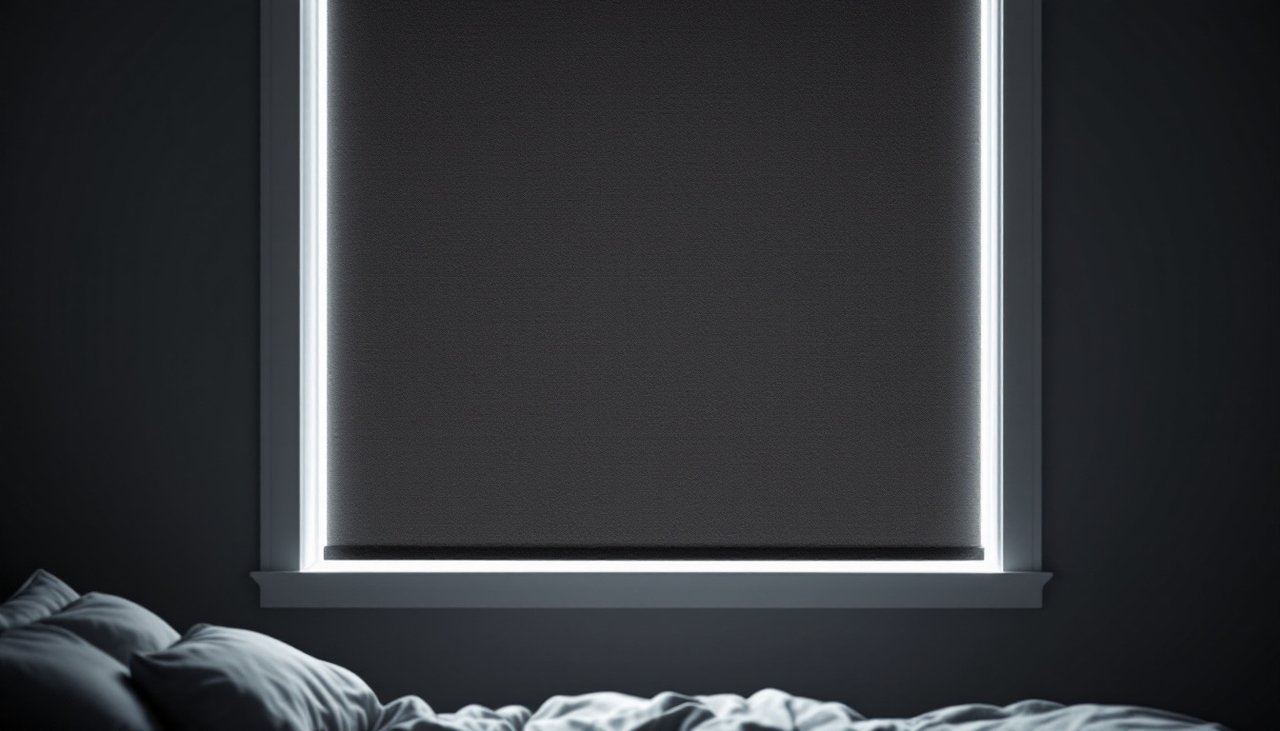
The blind side. Blinds give you more precise control in a smaller footprint. Sunscreen roller blinds are graded by openness factor, typically 1% to 10%. A lower number means a tighter weave, less glare and a dimmer view; a higher number means more light and a clearer view out. That precision is hard to match with fabric folds. Blockout roller blinds darken a room well, but an inside fit roller needs a small clearance on each side so the fabric can roll freely, usually around 10 to 15 mm. In a bedroom that faces a streetlight, that thin line of light is the surprise we hear about most often in our showrooms.
One spelling note while we are here: blockout and blackout mean the same thing in Australia. Blockout is the more common local word, so do not let a listing convince you that one is darker than the other because of the name.
Privacy After Dark: Fabric Matters More Than Format
This is where people most often get caught out, and it applies to both sides equally. A sheer curtain or a sunscreen blind gives good daytime privacy: from the street, people see a soft wash of fabric, while you can still see out. Once the lights go on inside, that flips. Both a sheer and a sunscreen blind will show shapes and movement after dark.
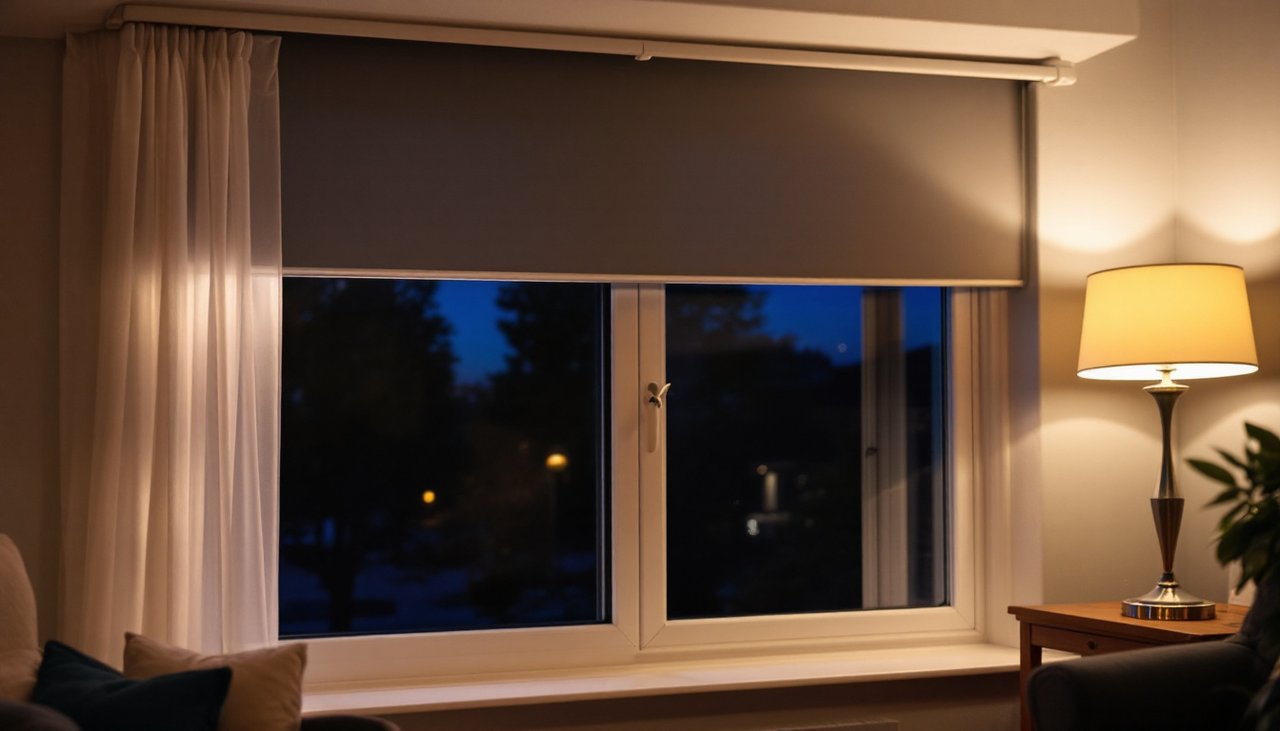
So for night privacy, the real question is not curtains or blinds, it is whether the window has a blockout layer. You can get that layer from either family:
- A sheer curtain in front with a blockout roller blind behind it, a combination we fit often
- A double track with a sheer curtain and a blockout curtain, all fabric, soft both ways
- A double roller blind, sunscreen and blockout on one bracket, for windows with no room for curtains
The combination to avoid is a sheer curtain over a sunscreen blind. Both layers are soft, so it doubles up on daytime filtering and still shows silhouettes at night. If you are leaning towards blinds and sheer curtains together, plan them as one job: the blind is measured to the reveal or frame first, then the curtain track goes in front with enough clearance for the sheer to move freely past the blind.
Fit and Space: Stack Room vs Reveal Depth
Where curtains struggle. Curtains need somewhere to go when they are open. That stack sits beside the window, so a window that runs right into a corner, a wardrobe or a kitchen cabinet may not have room for it. A curtain hanging over a sink, a bench top or a bed head is also asking for trouble. On the plus side, a curtain track can run well past the glass and up near the ceiling, which makes a modest window look bigger and a room look taller.
Where blinds struggle. Blinds want a flat, square surface to fix to. An inside fit needs enough depth in the window reveal for the roll, and handles, winders or deep sills can get in the way. Very wide openings may need to be split into more than one blind, which leaves a join.
The practical test we use at every measure: open the window fully and look at what sits beside it and in front of it. If there is clear wall on both sides, curtains are on the table. If furniture, fixtures or a tight corner crowd the frame, a blind is usually the easier fit.
Cleaning and Everyday Use: Wipe Down vs Take Down
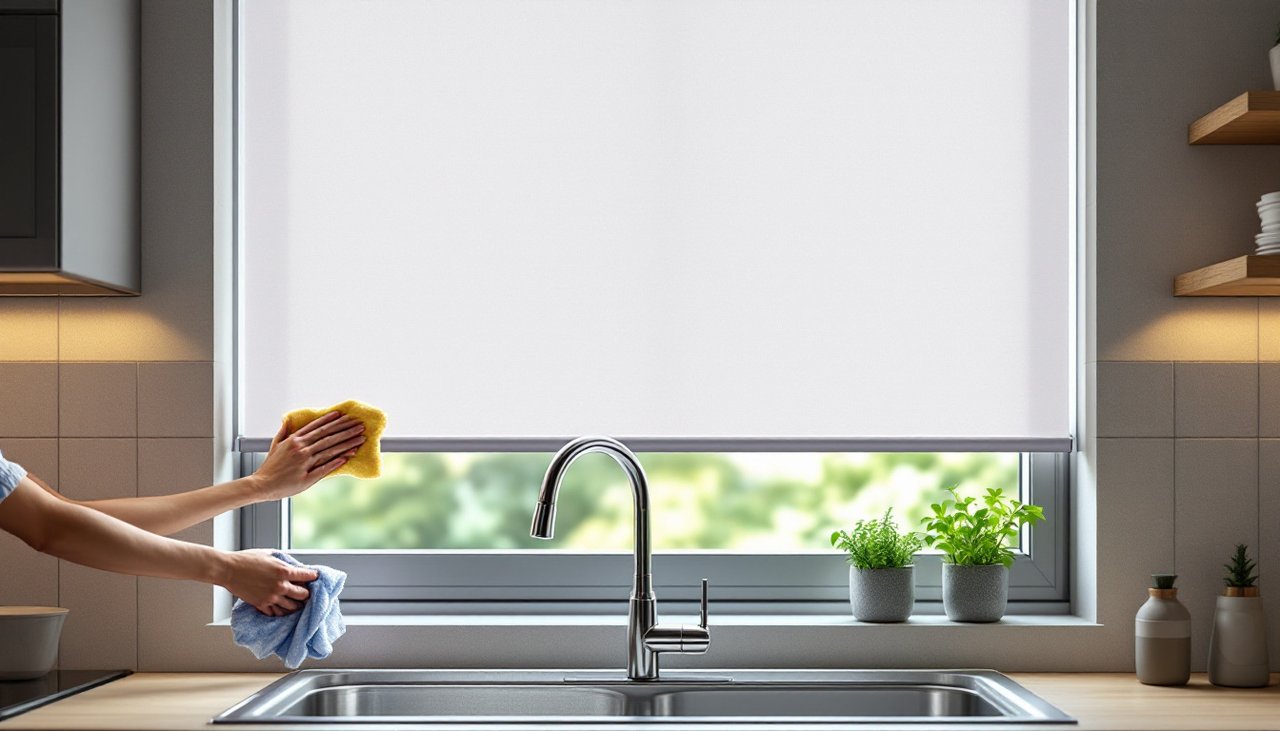
Blinds. For kitchens, bathrooms and laundries, blinds have a clear edge. Splashes and steam happen, and a roller blind can be wiped or vacuumed where it hangs. Nothing touches the floor, and nothing drags across a bench.
Curtains. Curtains collect a bit more dust in their folds and need to come down to be cleaned, following the care label for that fabric. Sheers are light and usually simple to handle; lined blockout curtains are heavier.
Cord safety applies to both. Australia has a mandatory safety standard for corded internal window coverings, which covers how blinds and curtains with cords or chains must be installed in homes. If you have young children, ask about chain tensioners and cleats at your measure, or skip cords altogether with motorisation.
Motorised Curtains vs Motorised Blinds
Both families can be motorised, and motorisation removes cords and chains completely. The right fit differs, though.
Motorised curtains shine on long tracks and wide sliding doors, where pulling a heavy run of fabric by hand gets old quickly, and on sheers you open and close every day.
Motorised blinds suit high or hard to reach windows, banks of several windows you want to move together, and bedrooms where you want the blockout down on a schedule.
Either way, the motor needs power, either a rechargeable battery or a hardwired connection, and that choice is worth making before walls are painted. How the installation is done for your windows, and what it involves, is confirmed at your in home measure.
Curtains: The Pros and Cons
Pros
- Add softness, texture and height that blinds cannot match
- Can extend past the frame to cover edge light and make windows look larger
- Sheer curtains filter daylight beautifully while keeping a view
- Pair naturally with a blockout layer on a double track
- Wide choice of fabrics, colours and headings such as S fold and pinch pleat
Cons
- Need stack space beside the window
- Use more fabric, especially sheers at 2 to 2.5 times fullness
- Must be taken down to clean
- Awkward near sinks, benches or wet areas
Blinds: The Pros and Cons
Pros
- Compact, tidy and out of the way when open
- Precise light control, with sunscreen openness from 1% to 10%
- Easy to wipe down in kitchens and bathrooms
- Work on windows with furniture or fixtures close by
- Double rollers give day and night control on one bracket
Cons
- Inside fit rollers leave small light gaps at the edges
- Can look plain on large glass or tall walls
- Sunscreen alone does not give night privacy
- Wide openings may need more than one blind, with a visible join
If blinds are sounding like the better fit, you can compare roller, double roller, blockout and vertical options in our window blinds range.
Similar Questions That Are Not Quite the Same
Blinds or drapes. Drapes is mostly an American word. In Australia, drapes simply means curtains, often heavier or lined ones, so everything above about curtains applies.
Sheers vs curtains. Sheers are a type of curtain, not a separate option. The useful comparison there is sheer versus blockout fabric, which is about how much light you want, not about curtains versus blinds.
Curtains, blinds or shutters. Plantation shutters are a third route with rigid louvres. They are supplied and fitted rather than sewn, and they behave differently again, so they deserve their own comparison rather than a footnote here.
Blinds and sheer curtains. This is not either or at all. It is the layered approach covered in the privacy section, a soft sheer in front with a blockout blind behind.
Which Is Right for You? A Room by Room Guide
Use this as a starting point, then check it against the space beside and in front of each window.
| Room | Lean towards curtains when | Lean towards blinds when |
|---|---|---|
| Living room | Large glass, sliding doors, you want softness and a view by day | The window sits behind a sofa or cabinet close to the frame |
| Main bedroom | You want a sheer for daytime plus a blockout curtain on a double track | Wardrobes crowd the window; a blockout roller under a sheer works well |
| Kids rooms | The window has clear wall each side for a lined blockout curtain | You want a compact blockout roller, preferably motorised or chain safe |
| Kitchen and laundry | Rarely; fabric near benches and splashes is hard work | Almost always, a wipeable sunscreen or blockout roller |
| Bathroom | Only away from the shower and basin | Usually, for privacy and easy cleaning |
| Study or media room | You want a soft look and full side coverage for darkness | You want precise glare control on a screen with sunscreen |
Choose curtains if you have wall space either side, you care about softness and height, and you are dressing a living area or a large window or door.
Choose blinds if space around the window is tight, the room is wet or busy, or you want exact light control in a slim profile.
Choose both if you want daytime softness and real night privacy in the same room. A sheer curtain in front of a blockout blind, or sheer and blockout curtains on a double track, covers both jobs.
If you want to see the full range of fabrics and headings before you decide, start with our custom curtains collection.
Get the Measure Done Before the Furniture Goes In
Every week a bedroom window stays bare is another week of early light and lamp lit silhouettes, and the easiest time to measure is before the bed, wardrobe and sofa are pushed into place. Book your free in home measure now and we will compare curtains and blinds on your actual windows, check stack space and reveal depth, and confirm every measurement so nothing on your quote is a guess. You can also visit one of our showrooms and spend half an hour handling sheer, blockout and sunscreen fabrics in person. Made to measure means nothing goes into production until the measure is done, so the sooner you book, the sooner your windows are sorted.
Frequently Asked Questions
Are curtains or blinds better for a bedroom?
Both can darken a bedroom well. Blockout curtains can be made wider and taller than the window, so they cover edge light that an inside fit roller blind leaves behind. Blinds suit bedrooms where wardrobes or furniture crowd the window, and many people pair a blockout blind with a sheer curtain in front.
Do blinds or curtains give more privacy at night?
It depends on the fabric, not the format. Sheer curtains and sunscreen blinds both show silhouettes once the lights are on inside. For full night privacy you need a blockout layer, either a blockout curtain, a blockout blind, or a double roller.
Can I have both curtains and blinds on the same window?
Yes, and it is one of the most practical setups. A blockout roller blind sits inside or close to the frame, and a sheer curtain hangs in front on its own track, giving soft daylight and full privacy at night.
Is blockout the same as blackout?
Yes. In Australia blockout is the usual word and blackout is the same thing under another name. Neither is darker by definition; the fabric and how it is fitted decide how dark the room gets.