How to Layer Sheer Curtains Over Roller Blinds
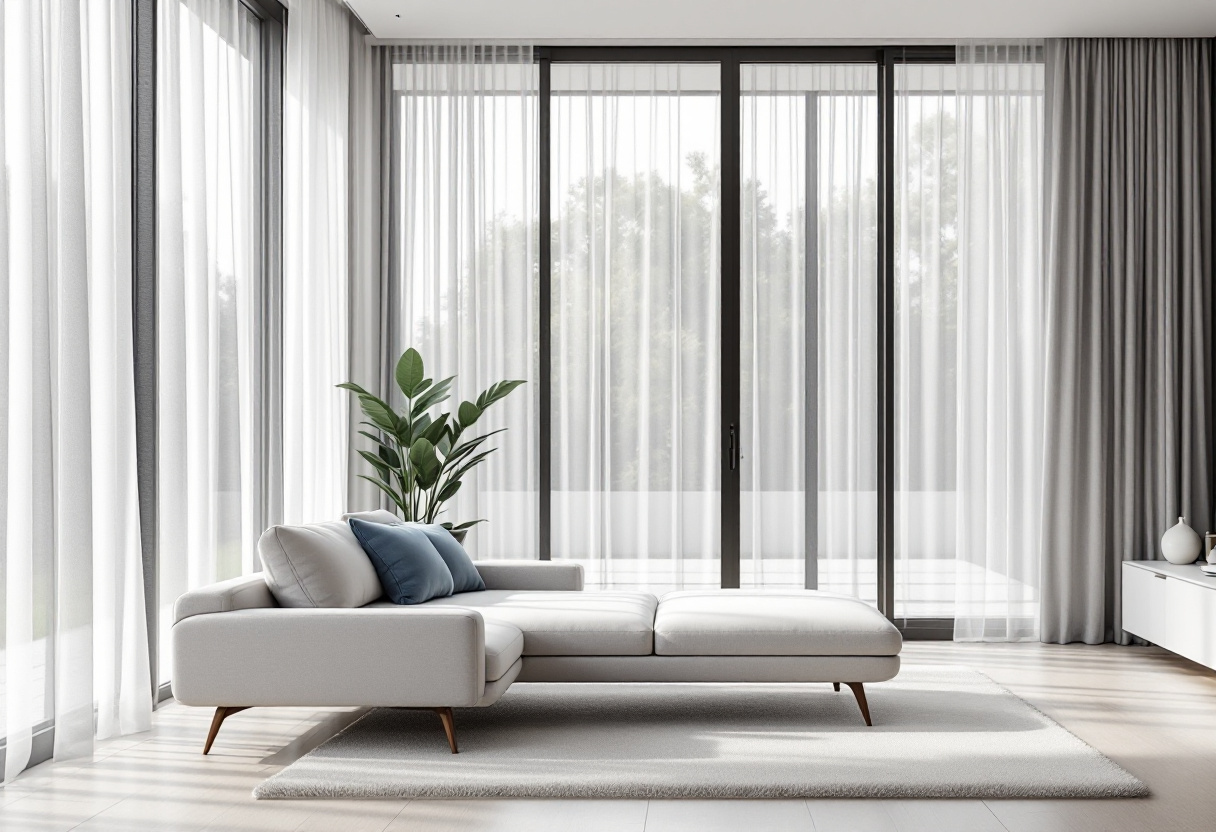
Sheer curtains and roller blinds each solve half of a window. Sheers soften the light and add privacy while the sun is up. A roller blind gives you the firm control you want after dark or during a midday glare. Put the two together on one window and you get a setup that adapts from morning to night with nothing more than a quick pull of each layer.
This guide covers how the layered look actually works, the fabric numbers worth knowing, which style of roller blind to pair with your sheers, where each layer should sit, and the rooms where the combination earns its place. It also covers the measurements you should sort out before anything is ordered.
The quick answer
What it gives you: soft, filtered daylight and daytime privacy from the sheers, plus adjustable light control and night-time privacy from the roller blind behind them.
Best roller blind to pair: usually a blockout roller, since your sheers already handle the soft daytime light. A sunscreen roller behind sheers only suits rooms with very harsh glare where you do not need darkness.
Where it shines: bedrooms, living rooms and any street-facing window where you want a finished look without giving up control of the light.
Why layer sheer curtains and roller blinds
A single window covering tends to ask you to compromise. Sheers on their own look beautiful and let the light through, but they do little once it is dark outside and the lights are on inside. A roller blind on its own controls the light well, but a bare roller can feel plain on a feature window, and a single roller only carries one fabric, so you are choosing to either filter the light or block it, not both.
Layering removes that compromise. Pairing roller blinds with sheer curtains lets each layer do the one job the other cannot. The sheer curtains stay as your default daytime layer, giving the room a soft frame and a gentle wash of light. The roller blind sits ready behind them for the moments a sheer cannot handle: bright afternoon glare on a screen, an early bedtime for the kids, or privacy once the street lights come on. In our showrooms this is one of the pairings customers ask about most, usually after living with sheers alone and finding they wanted more control at night.
How the two layers work through the day
The easiest way to picture a layered window is to walk it through a normal day.
- Morning and midday: sheers closed, roller up. Daylight filters through the fabric, the room stays bright, and passers-by cannot see straight in.
- Bright afternoon: lower the roller partway behind the sheers to cut glare on a screen or dining table. You trade a little view for firmer control of the light.
- Evening: once the inside lights are on, sheers alone stop working for privacy. Lower the roller to close the room off from the street.
- Night: with the roller fully down you get darkness for sleep, and the sheers still frame the window so it looks finished rather than bare.
That day-long flexibility is the whole point. One window, four different needs, handled by two layers you adjust in seconds.
The fabrics in numbers
Most layering guides stop at the idea. The part that actually decides how the window looks and performs is the fabric detail, so here are the numbers worth knowing before you choose.
| Detail | Typical range | What it changes |
|---|---|---|
| Sheer fullness | 2 to 2.5 times the track width | Higher fullness gives a softer, more gathered look and better privacy |
| Sunscreen openness factor | 1% to 10% | Lower (1 to 3%) is more private and cuts more glare; higher (5 to 10%) keeps more view |
| Blockout roller side gap | around 10 to 15mm each side | Light still slips down the edges of any roller, which is one reason the sheer layer helps |
| Sheer hem clearance | about 10mm off the floor | Just off the floor stays crisp; a slight break on the floor reads softer |
Two of these surprise people most. The first is fullness: a sheer needs roughly two to two and a half times the width of the window in fabric to hang with that flowing look, so the sheer ends up much wider than the glass. The second is the roller side gap. A roller blind runs inside its brackets, so a little light escapes down each edge. That gap is exactly why pairing a roller with sheers, or choosing blockout curtains for a very dark bedroom, gives a more complete result than a roller by itself.
Which roller blind should you pair with sheers?
Layering works by pairing a soft, see-through layer with a firm one. Your sheer is already the soft layer, so the roller you add behind it is almost always a blockout roller. That is the pairing most people are after when they layer over sheers: the sheer covers the day, and the blockout roller handles glare, darkness and night privacy.
So where does a sunscreen roller fit? A sunscreen roller filters light and keeps a shaded view, which is much the same job the sheer already does. Pairing the two mainly makes sense in one situation, a room with very harsh glare such as a west-facing living room or a home office with sun on a screen, where the sheer alone cannot tame the afternoon sun and you want extra glare control without full darkness. In most other rooms it doubles up on the soft layer and leaves you no way to darken the room. If you like the idea of two rollers instead of a sheer curtain, that is a separate setup: a double roller that carries a sunscreen and a blockout fabric on one bracket.
| Sheers + blockout roller (the usual choice) | Sheers + sunscreen roller (harsh-glare rooms only) | |
|---|---|---|
| Light control | Blocks most light when down, bar the edge gap | Filters and softens, much like the sheer already does |
| Gives you darkness | Yes | No |
| View out when down | None | Keeps a shaded view |
| Night privacy | Complete | Limited, a silhouette can still show |
| Best for | Most rooms, especially bedrooms and media rooms | Very bright, glare-prone rooms where you do not need darkness |
If you are still weighing the fabrics themselves, our guide on sheer versus blockout curtains walks through what each one does before you commit to a pairing. For most rooms, a blockout roller blind behind the sheers is the setup people are happiest with over time, because it handles the summer early sunrise and a bright street at night while the sheers take care of the day.
Layering versus day and night blinds: not the same thing
People researching this often land on day and night blinds (also called zebra or vision blinds) and assume they are the same idea. They are related but not the same, and the difference matters when you choose.
- Day and night blinds are a single roller with alternating sheer and solid stripes. You align the stripes to switch between a filtered view and more privacy. It is one compact unit and a lower-fuss option.
- Sheer curtains over a roller blind are two separate coverings. You get a genuinely soft curtain layer, a full blockout option behind it, and a more decorative finish, at the cost of a little more depth and planning.
If you want the tailored, flowing look and the option of true darkness, layered sheers and a roller win. If you want the simplest single unit on a tight window, a day and night blind is worth a look. Knowing which one you are actually after saves a lot of second-guessing at the measure.
Front or back: where each layer sits
In a layered window the sheer curtains hang at the front, closest to the room, and the roller blind sits behind them against the glass. There are good reasons for that order.
- The sheer is the layer you see most of the day, so it belongs where it reads as the finished, decorative layer.
- The roller tucks neatly against the window recess or just above it, out of the way until you need it.
- With the roller behind, you can raise it completely and let the sheers stand alone without any hardware showing through the fabric.
The roller can be fitted inside the window recess or mounted on the wall above it, and the sheer track runs in front, set far enough forward that the fabric clears the roller. That forward set is commonly around 60 to 100mm of projection, which is the sort of detail a measure confirms rather than something to guess.
Planning the fit: the measurements that matter
Because two coverings share one window, a layered setup needs a little more planning than a single blind or curtain. When we measure a layered window, recess depth is the detail that most often decides the approach.
- Recess depth: a roller tube and its brackets take up roughly the first 50 to 70mm of the recess, and the sheer track needs its own clearance in front. A recess around 100mm deep or more takes both comfortably. Shallower than that usually means mounting one or both layers on the wall above.
- Mounting height: deciding whether the roller sits inside the recess or above it changes how the sheers are hung and how the window reads.
- Track and heading: the sheer heading style affects the track you need and how the fabric stacks back when open. Remember the two to two and a half times fullness, so the stack-back beside the window is wider than people expect.
- Operation: think about which side the roller chain sits and how you want to draw the sheers, especially near furniture or a door.
- Motorisation: if reaching two coverings sounds like effort, the roller, the sheer, or both can be motorised so the whole window moves at the touch of a button.
These are the details a measure is designed to lock down. Getting them right is what makes a layered window feel effortless rather than fiddly.
Room by room: where the combination works best
Bedrooms
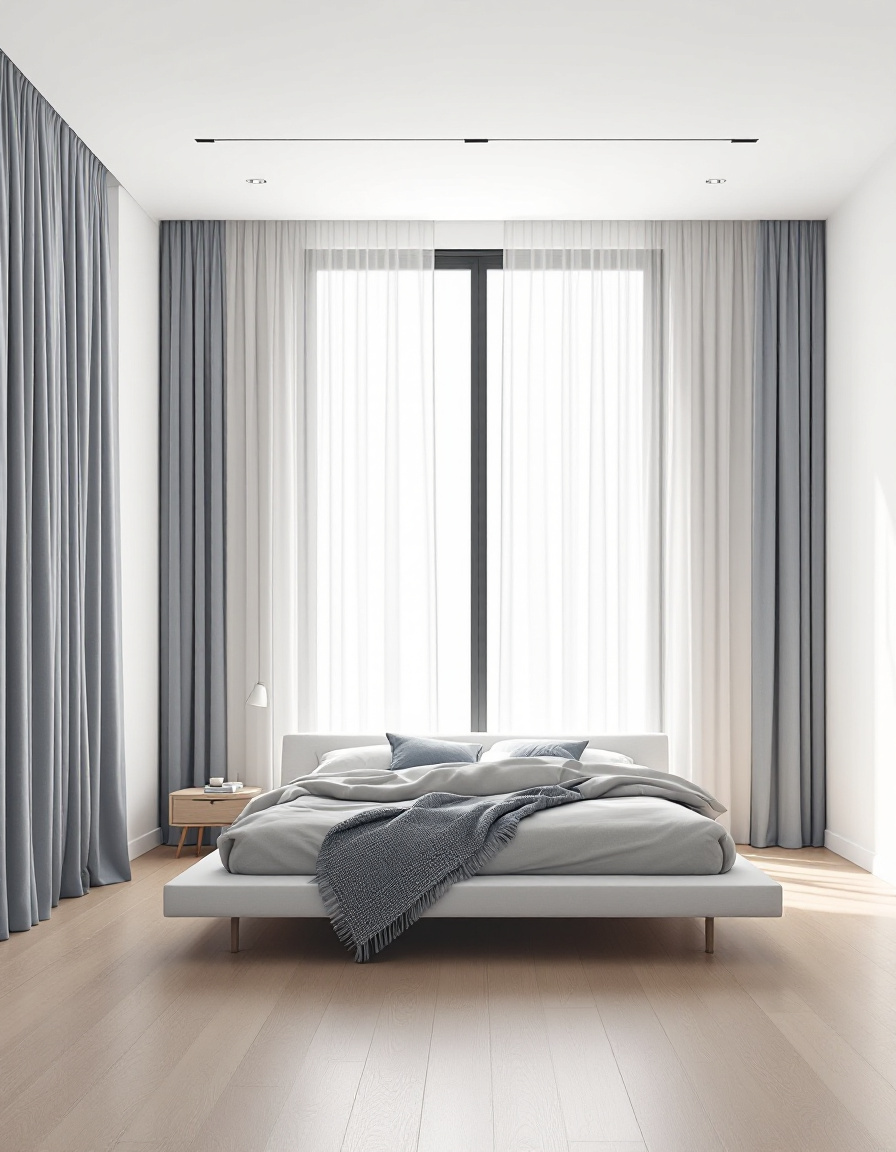
This is the room the layered setup was made for. Sheers give you a soft, private feel during the day, and a blockout roller behind them blocks most of the light so you can sleep past an early sunrise. One honest caveat: any roller leaves a thin gap of light down each side, so if you want the room as dark as possible, blockout curtains that overlap the wall, or side channels on the roller, close those edges better than a roller behind sheers alone.
Living and dining rooms
A blockout roller behind the sheers is the usual pick here too, because it lets you darken the room for movies or an afternoon nap on top of everything the sheers already do by day. If your only concern is glare on the television and you do not want the room fully dark, a sunscreen roller is a fair alternative, though most people value keeping the darkness option.
Street-facing and ground-floor windows
Any window close to a footpath benefits from two layers. Sheers cover you by day, and the roller closes the gap the moment the inside lights make a sheer see-through. It is a tidy answer to the privacy question without resorting to permanently closed curtains.
Studies and kitchens
Rooms with screens or task lighting want glare control more than full darkness. Sheers plus a sunscreen roller let you fine-tune the light through the day, which suits a work-from-home desk or a bright kitchen bench.
Getting the colour and fabric pairing right
A layered window looks its best when the two fabrics agree with each other. A few simple habits keep it looking considered rather than busy.
- Let the sheer lead: since it is the layer on show all day, choose the sheer colour first and match the roller to it.
- Keep the roller quiet: a plain roller in a tone close to the sheer or the wall keeps the focus on the softer fabric.
- Mind the light direction: a soft ivory sheer keeps a room feeling gentle, while a cooler white can look crisp and modern. Both work, so pick the mood you want.
- Think about fullness: a sheer at the upper end of that two and a half times range gives the gathered, flowing look. A flatter heading reads more contemporary.
Motorising a layered window
Two coverings on one window means two things to operate, which is why layered windows are a popular choice for automation. You can motorise the roller, the sheer, or both, and set them to move together on a remote, a wall switch or a schedule. It suits wide windows, high or hard-to-reach openings, and anyone who would rather not reach behind a sheer for a roller chain. If that appeals, our motorised blinds range covers the roller side, and sheer tracks can be motorised to match.
Frequently asked questions
Can you put blinds and curtains on the same window?
Yes. Combining blinds with curtains on one window is a common and practical setup, and sheers over a roller blind is one of the most popular versions. The curtain layer softens the look and covers daytime privacy, while the blind gives you firm control of light and darkness.
Can you see through sheer curtains at night?
Yes. Once it is dark outside and the lights are on inside, most sheers become see-through from the street because the light is now coming from behind them. That is the exact reason a roller blind behind the sheers is worth having: you lower it in the evening for privacy the sheer can no longer provide.
How much wider than the window should sheer curtains be?
Plan for roughly two to two and a half times the track width in fabric. That fullness is what gives sheers their soft, gathered look, and it means the fabric stacks back wider than the glass when the sheers are open, so allow room beside the window.
Do blockout roller blinds block all the light?
A blockout roller stops light through the fabric itself, but a small gap of around 10 to 15mm down each side lets a thin line of light in. A sheer in front does not close that gap, so for a room that needs to be as dark as possible, blockout curtains that overlap the wall, or a roller with side channels, give the most complete result.
Do sheer curtains and roller blinds need special tracks?
They run on separate hardware. The roller mounts to the recess or wall, and the sheers hang on their own track in front, set forward so the two clear each other. That clearance is planned at the measure.
Can the whole layered window be motorised?
Yes. Both the roller blind and the sheer curtains can be motorised, together or separately, so a wide or hard-to-reach window opens and closes on a remote or a set schedule.
Next step
A layered window is one of those setups that is simple to enjoy and worth planning properly. If you are considering sheers over a roller blind for a room in your home, the easiest starting point is a measure and quote, where the recess, track and pairing are all confirmed for your windows. Browse the sheer curtains range and roller blinds to see the fabrics, then book a free measure to plan the combination that suits your rooms.